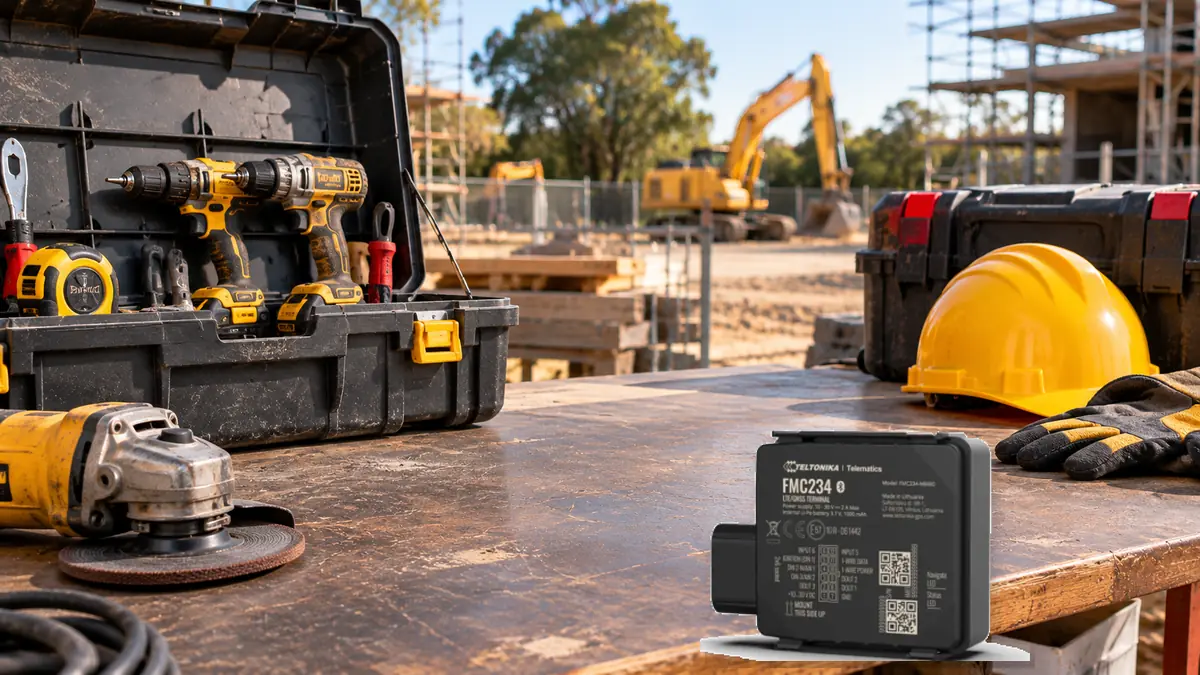
Tools are essential to construction companies, electricians, plumbers, mechanics and industrial businesses. From power drills and cutting machines to specialised equipment and heavy-duty tools, businesses often carry valuable equipment between workshops, vehicles and job sites.
Keeping track of every tool can become difficult, especially when employees work across multiple locations. Tools may be misplaced, left behind at customer sites or moved without permission. Replacing missing equipment can also increase business expenses and interrupt daily work.
A Heavy Duty GPS Tracker for Tools can help businesses monitor selected valuable equipment and improve asset visibility. Depending on the device, a GPS tracking solution may provide location updates, movement notifications and geofencing alerts.
For Australian businesses managing tools across construction sites, warehouses and service vehicles, choosing a suitable tracking solution can make equipment management easier.
In this guide, we explain how GPS tool tracking works, which tools can be monitored, what features to consider and how businesses can select a suitable asset tracking device.
What Is a Heavy Duty GPS Tracker for Tools?
A heavy duty GPS tracker for tools is a tracking device designed to monitor the location of valuable equipment and portable assets.
Depending on the application, the tracker may be installed directly on suitable equipment, placed inside a secure equipment compartment or attached to a tool storage case.
The device collects positioning information and sends it to a connected tracking platform through a supported communication network.
Authorised users can then check the reported location of connected assets using a computer or mobile device.
Depending on the model, a tool tracking solution may include:
- GPS location monitoring
- Movement detection
- Location history
- Geofencing alerts
- Battery-powered operation
- Low-battery notifications
- Tamper alerts, where supported
- Multiple asset monitoring
- Mobile and web dashboard access
Not every GPS tracker supports all these functions. The correct device depends on the size of the tool, installation method, power requirements and monitoring needs.
Why Do Businesses Need GPS Trackers for Tools?
Professional tools can represent a significant investment. Businesses that manage large equipment inventories need a practical way to monitor where their valuable assets are located.
1. Improve Tool Security
Tools may be left unattended in work vehicles, construction sites, storage areas and workshops.
A compatible GPS tracker can provide location information and movement notifications when equipment moves under configured conditions.
This can help businesses identify unexpected activity and review the last reported location of a tracked asset.
GPS tracking does not guarantee theft prevention or recovery, but it can provide useful information when equipment goes missing.
2. Monitor Tools Across Multiple Worksites
Construction and maintenance businesses often send employees to different customer locations.
A central tracking platform can help managers check the reported locations of connected equipment without visiting every worksite.
3. Reduce the Cost of Replacing Missing Tools
When valuable tools go missing, businesses may need to purchase replacements to continue their work.
Location monitoring and movement alerts can support better equipment oversight and help businesses respond to unexpected movement.
4. Manage Shared Equipment
Some businesses allow different employees or teams to use the same equipment.
A tracking system can help managers review where connected tools were last reported, making it easier to coordinate equipment allocation.
5. Improve Asset Management
Tracking valuable tools can complement existing inventory records.
Businesses can use location information alongside equipment registers, maintenance schedules and internal sign-out procedures.
How Does a GPS Tracker for Tools Work?
A GPS tool tracking solution generally uses three main processes.
Step 1: Install or Attach the Tracking Device
A suitable tracking device is attached to the equipment or placed in an appropriate location.
The installation method depends on the tracker design and tool type.
For small handheld tools, device size and secure attachment are particularly important. For larger industrial equipment, a more substantial tracking unit may be suitable.
Step 2: Receive GPS Location Information
The tracker receives signals from navigation satellites and calculates its geographical position.
Depending on the device, it may collect location information at scheduled intervals or when movement is detected.
Step 3: View the Asset Location
The device sends location information through a supported communication network to a tracking platform.
The platform displays the reported position on a digital map.
Depending on the software, users may also access movement alerts, geofencing notifications and historical location records.
Important: GPS positioning and location data transmission are different functions. A tracker also needs a suitable communication connection to send its location to a remote platform.
Which Tools and Equipment Can Be Tracked?
GPS tracking can be useful for selected tools and equipment, provided the tracker is suitable for the asset’s size, power requirements and operating environment.
Power Tools
Professional power tools are commonly used by construction and maintenance teams.
Examples include:
- Cordless drills
- Impact drivers
- Angle grinders
- Circular saws
- Demolition hammers
- Concrete cutting machines
For smaller tools, a compact tracker or a tracking device attached to a tool case may be more practical than a large GPS unit.
Construction Tools and Equipment
Construction businesses often move valuable equipment between project locations.
Selected equipment may include:
- Concrete mixers
- Compactors
- Generators
- Air compressors
- Welding machines
- Portable construction equipment
Industrial Tools
Industrial businesses may use specialised equipment that requires careful asset management.
A suitable tracking solution can help managers monitor the locations of compatible mobile equipment.
Toolboxes and Equipment Cases
Tracking a toolbox or equipment case can be a practical option when individual tools are too small for separate GPS trackers.
Businesses can monitor the location of the container rather than fitting a tracker to every item inside it.
Maintenance and Service Equipment
Electricians, plumbers, mechanics and maintenance contractors often carry tools in service vehicles.
Tracking selected equipment cases or larger assets can help businesses improve visibility when teams travel between customer locations.
Important Features to Look for in a Heavy Duty Tool GPS Tracker
Choosing a GPS tracker involves more than checking its location accuracy. Consider the following features before selecting a device.
Compact and Secure Installation
Tools come in different shapes and sizes. The tracker should fit the equipment without affecting its normal use.
For small tools, consider the device dimensions and mounting options. For larger machinery and equipment cases, a more substantial tracker may be appropriate.
Long Battery Life
Battery life is important when tracking equipment that does not have a continuous power supply.
Check the battery capacity and manufacturer’s estimated operating time.
Actual battery performance depends on reporting frequency, movement activity, network conditions and temperature.
Movement Detection
Movement detection can help identify when equipment starts moving.
A compatible tracking platform may send a notification when a tracked asset moves under selected conditions.
Geofencing Alerts
Geofencing allows businesses to create virtual boundaries around selected locations.
For example, a company can set up a boundary around its workshop or equipment storage yard.
A compatible system can generate an alert when a tracked asset enters or leaves the defined area.
Location History
Historical location records help businesses review where equipment was previously reported.
This information can support asset checks and investigations into unexpected movement.
Waterproof and Dust Protection
Tools used at construction sites and outdoor locations may be exposed to dust, rain and other environmental conditions.
Check the tracker’s IP rating and installation requirements before using it in demanding environments.
Do not assume that every heavy-duty tracker is waterproof.
Network Connectivity
Check how the device transmits its location information.
Many GPS asset trackers use cellular connectivity. These devices require supported network coverage to send location updates.
Tracking Platform
A suitable tracking platform should make it easy to view connected assets and access available monitoring features.
Consider location history, movement alerts, geofencing and multiple asset management.
GPS Tracker for Tools vs Traditional Tool Inventory Management
Traditional inventory management and GPS tracking perform different roles. Businesses can use them together.
| Feature | Manual Tool Inventory | GPS Tool Tracking |
| Asset records | Yes, when maintained | Can complement inventory records |
| Location information | Depends on staff updates | GPS updates on compatible devices |
| Movement alerts | Not normally available | Available on supported trackers |
| Geofencing | Not normally available | Available on compatible platforms |
| Location history | Depends on manual records | Available on supported systems |
| Remote monitoring | Limited | Available through tracking software |
GPS tracking is not a replacement for tool registers, employee sign-out procedures or physical security. It adds location information to existing equipment management processes.
How to Choose the Right Heavy Duty GPS Tracker for Tools in Australia
Before purchasing a tracker, consider how your business uses its equipment.
1. Identify the tools. Decide whether you want to monitor individual power tools, toolboxes, generators or larger industrial equipment.
2. Check the tracker size. Make sure the device can be attached securely without interfering with the equipment.
3. Review battery life. Compare battery capacity and expected operating time under your intended reporting settings.
4. Check movement alerts. Look for movement detection and notifications if monitoring unexpected equipment movement is important.
5. Review geofencing. Check whether the tracking platform supports virtual boundaries and entry or exit notifications.
6. Confirm network coverage. Make sure the communication technology suits the locations where your tools operate.
7. Check environmental protection. Review water resistance, dust protection and temperature specifications.
8. Compare tracking software. Look for a platform that supports multiple assets, location history and mobile access.
9. Calculate ongoing costs. Consider hardware, installation, connectivity, battery replacement and software subscription fees.
How Australia Fleet Tracking Can Help
Businesses looking to monitor valuable tools and equipment should choose a GPS tracking product that matches the asset and its working environment.
Australia Fleet Tracking offers GPS tracking products for businesses interested in monitoring vehicles and valuable assets.
For businesses managing larger equipment and machinery, explore Equipment and Asset GPS Tracking in Australia.
Companies managing commercial vehicles can also learn more about Vehicle Tracking and GPS Fleet Tracking Australia.
If your business manages equipment transported on commercial trailers, visit Trailer and Truck Tracking.
Frequently Asked Questions
1. What is a heavy duty GPS tracker for tools?
It is a GPS tracking device designed to monitor the location of compatible tools and valuable equipment. Depending on the model, it may provide location updates, movement notifications and geofencing alerts.
2. Can GPS trackers be installed on power tools?
Some compact trackers may be suitable for larger power tools or their storage cases. However, many handheld tools are too small for conventional GPS tracking devices. Check the tracker’s dimensions and mounting requirements.
3. Can I track a toolbox instead of individual tools?
Yes. Placing a suitable GPS tracker inside or attaching it securely to a toolbox can help monitor the location of the entire case.
4. Can a GPS tracker send alerts when tools move?
Some devices support movement detection and notifications. The available alert settings depend on the tracker and software platform.
5. How long does a GPS tool tracker battery last?
Battery life varies by device, battery capacity, reporting frequency, network conditions and movement activity. Check the manufacturer’s specifications for the intended configuration.
6. Can GPS tracking help recover stolen tools?
A GPS tracker may provide location information that can assist businesses and relevant authorities when investigating missing or stolen equipment. Recovery is not guaranteed.
7. Are heavy-duty GPS trackers waterproof?
Some models include water and dust protection. Always check the manufacturer’s IP rating and installation instructions before using a tracker in outdoor environments.
8. Can I monitor multiple tool trackers from one dashboard?
Many commercial tracking platforms support multiple devices through one account. Check the software’s device limits and subscription conditions.
9. Is GPS tracking suitable for construction companies?
Yes. GPS tracking can support the monitoring of compatible construction equipment, machinery and tool storage cases across multiple worksites.
Final Thoughts
Tools and industrial equipment are valuable business assets that need proper management. A heavy duty GPS tracker for tools can help businesses monitor selected equipment, receive movement notifications and review location history.
For construction companies, maintenance contractors and industrial businesses, GPS tracking can add another layer of visibility to existing asset management procedures.
Before selecting a tracking device, check its size, battery life, communication technology, environmental protection and software features. The most suitable solution depends on the equipment you want to monitor and the conditions in which it operates.


