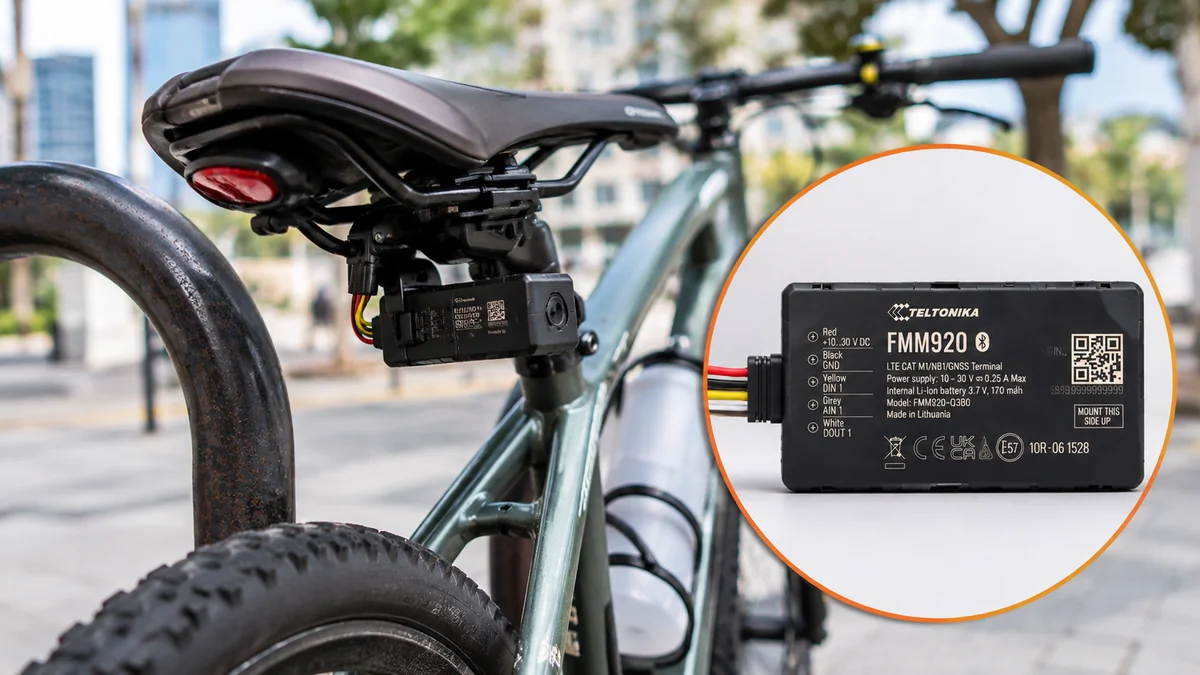
A bicycle is a valuable investment, whether you use it for daily commuting, fitness, outdoor adventures or professional cycling. However, leaving a bike unattended at public parking areas, workplaces, railway stations or residential buildings can create security concerns.
A Real-Time Bicycle Location Tracker helps cyclists monitor their bicycle’s location through GPS technology and a connected tracking platform. Depending on the device, users can check location updates, receive movement notifications and review available tracking history through a smartphone.
Unlike a traditional bicycle lock, a GPS tracking device can provide geographical location information if a bicycle moves unexpectedly.
For cyclists who want additional security and better location visibility, choosing a suitable GPS tracker can be a practical step.
In this guide, we explain how real-time bicycle tracking works, which features matter, how to install a tracker and what to consider before purchasing one.
What Is a Real-Time Bicycle Location Tracker?
A real-time bicycle location tracker is an electronic device designed to monitor a bicycle’s geographical position and provide location information through a compatible tracking platform.
A GPS-enabled tracker receives positioning signals from navigation satellites and calculates the bicycle’s location. It then transmits the information through a supported communication network.
Users can access available tracking information through a mobile application or web dashboard.
Depending on the model, a real-time bicycle GPS tracker may offer:
- GPS location monitoring
- Frequent location updates
- Movement notifications
- Geofencing alerts
- Historical location records
- Mobile application access
- Rechargeable or replaceable battery
- Low-battery notifications
- Remote bicycle monitoring
The actual features depend on the tracking device, communication technology and software platform.
Why Do You Need a Real-Time GPS Tracker for Your Bicycle?
Bicycle theft can happen in public places, residential areas and workplaces. A tracking device adds another layer of security by providing location information.
1. Check Your Bicycle’s Location
A compatible GPS tracker allows you to check the reported position of your bicycle through a connected application.
This can be useful when parking your bike outside a shopping centre, office, railway station or other public location.
2. Receive Unexpected Movement Alerts
Some bicycle trackers include movement detection.
When the parked bicycle moves under configured conditions, the device may send a notification to your smartphone.
This can help you identify unexpected activity and check your bicycle sooner.
3. Monitor Your Bicycle Remotely
With suitable connectivity, you can access available location information without being physically near your bicycle.
This is useful for cyclists who regularly leave their bikes at different locations.
4. Support Bicycle Theft Investigations
If a bicycle goes missing, its last reported GPS position may provide useful information.
Depending on the device and network connection, updated location information may also be available.
This information may assist when reporting the theft to the relevant authorities, although GPS tracking cannot guarantee bicycle recovery.
5. Review Previous Locations
Some tracking platforms store historical location information.
This can help cyclists review previous reported positions and, where supported, understand the movement of their bicycles.
How Does a Real-Time Bicycle Location Tracker Work?
A GPS bicycle tracker generally uses three stages to provide location information.
Step 1: GPS Positioning
The tracking device receives signals from navigation satellites and calculates its geographical position.
The device uses this information to determine where the bicycle is located.
Step 2: Wireless Location Transmission
The tracker sends its location information through a supported communication network.
Cellular GPS trackers generally use a SIM card or embedded connectivity arrangement to transmit data to a remote platform.
Bluetooth-based trackers use a different method and may depend on nearby compatible devices or a supported finding network.
Step 3: View the Location on Your Smartphone
The tracking platform receives the available information and displays the bicycle’s reported location.
Depending on the product, users may also access movement notifications, geofencing alerts and location history.
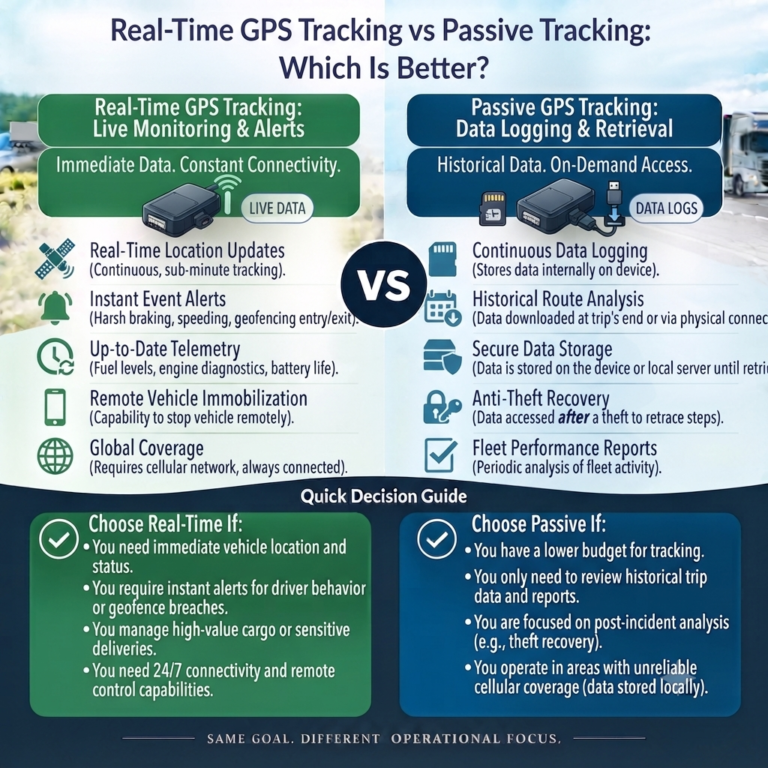
Important: Real-time tracking does not always mean continuous updates every second. The reporting interval depends on the device, connectivity, settings and battery-saving features.
Different Types of Real-Time Bicycle Tracking Devices
Bicycle tracking products use different technologies. Understanding their differences can help you choose the right option.
1. Cellular GPS Bicycle Tracker
A cellular GPS tracker uses satellite positioning to calculate the bicycle’s location and a mobile network to transmit that information.
Depending on the model, it may support:
- Remote location monitoring
- Movement alerts
- Geofencing
- Location history
- Mobile application access
These devices require suitable mobile network coverage and may involve ongoing connectivity costs.
2. Bluetooth Bicycle Tracker
Bluetooth trackers are generally designed for nearby item finding.
They communicate with compatible smartphones or supported device networks.
They may help locate a bicycle when it is nearby or when a supported finding network detects the device.
However, Bluetooth tracking is not equivalent to independent GPS location tracking.
3. Rechargeable GPS Bicycle Tracker
Rechargeable GPS trackers use an internal battery that requires periodic charging.
Battery life depends on battery capacity, reporting frequency, network conditions and device configuration.
4. Hidden Bicycle GPS Tracker
Some bicycle tracking devices are designed for discreet installation.
Depending on the bicycle and product, they may fit beneath a seat, inside a compatible frame compartment or within a dedicated bicycle accessory.
Always check the manufacturer’s installation instructions and bicycle compatibility.
Important Features to Look for in a Real-Time Bicycle Location Tracker
Before buying a bicycle GPS tracker, compare the following features.
Frequent GPS Location Updates
Check how often the device reports its position.
Some trackers provide frequent updates, while others use scheduled reporting to manage battery consumption.
Choose an update interval that suits your monitoring requirements.
Movement Detection
Movement detection can help identify when a parked bicycle starts moving.
A compatible device may send an alert when movement occurs under selected conditions.
Geofencing Alerts
Geofencing allows users to create virtual boundaries around selected locations.
For example, you can create a boundary around your home, workplace or bicycle storage area.
A compatible tracking platform may notify you when the bicycle enters or leaves that area.
Long Battery Life
Battery life is important for cyclists who do not want to charge their tracking device frequently.
Compare battery capacity and manufacturer estimates under realistic reporting conditions.
Frequent location updates and cellular communication can increase power consumption.
Compact and Discreet Design
A bicycle tracker should fit securely without interfering with normal riding.
Check the dimensions, mounting options and compatibility with your bicycle.
Waterproof Protection
Bicycles are regularly exposed to changing weather conditions.
Check the tracker’s IP rating and manufacturer’s instructions if you ride in rain or park outdoors.
Mobile Application Support
A suitable tracking application should make it easy to check location information, manage alerts and review battery status where supported.
Also check smartphone compatibility and subscription requirements.
Where Can You Install a GPS Tracker on a Bicycle?
The installation location depends on the tracker design and bicycle model.
Under the Bicycle Seat
Some compact trackers can be fitted beneath a bicycle seat using a compatible mounting accessory.
This can provide a relatively discreet installation.
Inside a Compatible Bicycle Frame
Some bicycles have suitable compartments or accessories designed to accommodate tracking devices.
Always confirm compatibility before installing a tracker inside the frame.
Inside a Bicycle Accessory
A tracker may be placed inside a compatible storage accessory or protective case.
Make sure the installation does not interfere with the device’s positioning or communication functions.
On the Bicycle Frame
Some tracking devices use dedicated mounting brackets.
Choose a secure mounting method that does not affect steering, braking or other bicycle components.
Real-Time GPS Tracker vs Bluetooth Bicycle Tracker
Both technologies can help cyclists locate their bicycles, but they work differently.
| Feature | GPS Bicycle Tracker | Bluetooth Tracker |
| Positioning | GPS satellite positioning | Nearby device connectivity |
| Remote location updates | Available with suitable connectivity | Depends on supported network |
| Movement alerts | Available on compatible devices | Product dependent |
| Geofencing | Available on compatible platforms | Product dependent |
| Cellular connection | Required by cellular GPS models | Not always required |
| Battery | Depends on device | Often designed for low power use |
A cellular GPS tracker is generally more suitable when independent remote location monitoring is required. Bluetooth trackers can suit nearby item-finding requirements.
How to Choose the Right Bicycle Location Tracker in Australia
Before purchasing a bicycle tracking device, consider the following points.
1. Identify your tracking needs. Decide whether you need theft monitoring, remote location updates or cycling route records.
2. Check the tracking technology. Confirm whether the device uses GPS, cellular connectivity, Bluetooth or a combination.
3. Compare reporting frequency. Choose a device that provides suitable location updates without unnecessary battery consumption.
4. Review battery performance. Check the manufacturer’s battery estimates and charging requirements.
5. Check installation compatibility. Make sure the device fits your bicycle and can be mounted securely.
6. Review weather protection. Check the IP rating if you regularly cycle in wet conditions.
7. Confirm network coverage. Cellular GPS trackers need compatible mobile network coverage in the areas where you ride.
8. Understand ongoing costs. Include hardware, installation, connectivity and subscription fees.
9. Check mobile application features. Make sure the tracking platform supports your smartphone and provides the functions you need.
How Australia Fleet Tracking Can Help
Choosing a GPS tracking product depends on the type of asset you want to monitor and the features required.
Australia Fleet Tracking offers GPS tracking products for businesses and customers interested in vehicle and asset monitoring.
For broader information about GPS tracking solutions, explore the Vehicle Tracking page.
Businesses managing larger equipment and valuable assets can also visit Equipment and Asset GPS Tracking in Australia.
Before purchasing, confirm whether the available product range includes a bicycle-compatible tracker. Commercial vehicle tracking devices may have different power, size and mounting requirements.
Frequently Asked Questions
1. What is a real-time bicycle location tracker?
It is a tracking device that helps monitor a bicycle’s geographical location through GPS positioning and a supported communication network.
2. Can I track my bicycle live from my phone?
Yes, a compatible GPS tracker with suitable network connectivity can send location updates to a mobile application. The update frequency depends on the device and its settings.
3. Can a GPS tracker help locate a stolen bicycle?
A GPS tracker may provide location information that can assist with a theft investigation. However, recovery is not guaranteed.
4. Does a real-time bicycle GPS tracker need a SIM card?
Many cellular GPS trackers use a SIM card or embedded connectivity to transmit location information. Other tracking technologies work differently.
5. How long does a bicycle GPS tracker battery last?
Battery life varies by device, battery capacity, reporting frequency, network conditions and usage. Check the manufacturer’s specifications.
6. Can I receive an alert when my bicycle moves?
Some GPS tracking devices support movement detection and smartphone notifications. The feature depends on the tracker and software platform.
7. Are bicycle GPS trackers waterproof?
Some models offer water and dust protection. Check the manufacturer’s IP rating and installation instructions before using the device in wet conditions.
8. Can I hide a GPS tracker on my bicycle?
Some devices are designed for discreet installation beneath the seat, inside compatible accessories or in suitable frame compartments.
9. Is a GPS tracker better than a bicycle lock?
They serve different purposes. A bicycle lock provides physical protection, while a GPS tracker provides location monitoring. Using both offers a more complete security approach.
Final Thoughts
A real-time bicycle location tracker can help cyclists monitor their bicycles and improve their security arrangements.
With suitable GPS positioning and connectivity, a tracking device may provide location updates, movement notifications and access to historical records.
Before choosing a product, compare its reporting frequency, battery life, installation options, network compatibility and weather protection.
A GPS tracker works best alongside a strong bicycle lock and secure parking practices. These measures can help cyclists take a more informed approach to bicycle security.