A GPS tracker helps Australian businesses monitor vehicle locations, review trips and improve fleet visibility. Whether you operate delivery vans, commercial trucks, rental cars or company vehicles, a suitable GPS tracking device can provide useful information to support daily operations.
Australia Fleet Tracking helps businesses explore GPS tracking hardware and vehicle monitoring solutions for different operational needs. From individual vehicles to larger commercial fleets, choosing the right tracker starts with understanding how your vehicles operate and what information you need.
In this guide, we explain how GPS trackers work, which features matter most and how Australian businesses can choose a suitable vehicle tracking solution.
What Is a GPS Tracker?
A GPS tracker is an electronic device that uses satellite positioning to determine its location. Depending on its design, the device can transmit location data to a connected platform using a mobile network or another supported communication method.
Users can then view vehicle locations and, where supported, access trip history, movement alerts and other tracking information.
Businesses commonly use GPS trackers for:
- Cars and company vehicles
- Commercial vans and utes
- Trucks and delivery vehicles
- Rental cars and shared vehicles
- Construction and field service fleets
A tracker can work independently or as part of a larger fleet management system.
How Does a GPS Tracking Device Work?
A vehicle GPS tracker receives positioning signals from satellites to estimate its location. The device then communicates this information to a tracking platform, depending on its connectivity and configuration.
A typical tracking process involves three stages.
1. Location detection: The device determines its position using satellite signals.
2. Data transmission: The tracker sends available location information through a supported connection.
3. Platform monitoring: A compatible application or web dashboard displays the information to authorised users.
Some tracking devices also support ignition detection, movement alerts, geofencing or additional vehicle data. These functions depend on the hardware, installation and software platform.
GPS positioning and mobile connectivity are different. A device may determine its location but be unable to transmit updates when network coverage is unavailable.
Benefits of Using a GPS Tracker in Australia
Real-Time Vehicle Monitoring
A GPS tracking system can help businesses check vehicle locations without relying entirely on phone calls or manual updates. This can make it easier to coordinate jobs, manage deliveries and understand vehicle movements.
Update frequency varies by device and configuration, so check the specifications before choosing a solution.
Improved Fleet Management
Businesses managing several vehicles can use a central dashboard to view supported tracking information. Fleet managers may review trip history, vehicle activity and other available reports to make better operational decisions.
Support for Vehicle Security
A GPS tracker can help identify a vehicle’s location and provide alerts for certain types of movement. Some devices support geofencing, which allows users to define geographical boundaries and receive notifications when configured conditions are met.
Tracking does not guarantee theft prevention or recovery. Combine it with appropriate physical security, insurance and access controls.
Better Route Planning
Historical location information can help businesses review travel patterns and identify opportunities to improve route planning. Dispatch teams can use available tracking information to coordinate vehicles more effectively.
Actual fuel savings depend on factors such as driving behaviour, route selection, traffic and vehicle condition.
Greater Operational Visibility
When managers can review vehicle activity in one place, they may find it easier to identify delays, investigate unexpected trips and plan vehicle allocation.
The value of tracking depends on accurate data, suitable software and consistent use.
Types of GPS Trackers for Vehicles
Wired GPS Trackers
Wired trackers connect to a vehicle’s electrical system. Depending on the model, they may support ignition status, movement monitoring and additional vehicle inputs.
These devices can suit businesses that need a permanently installed tracking solution.
OBD GPS Trackers
Some trackers connect through a compatible onboard diagnostics port. They can simplify installation and may provide selected vehicle information, depending on the device and vehicle.
Always check compatibility before purchasing.
Battery-Powered GPS Trackers
Battery-powered devices can suit applications where a permanent electrical connection is impractical. Battery life depends on battery capacity, reporting frequency, connectivity and operating conditions.
GPS Trackers for Commercial Fleets
Commercial tracking devices can support trucks, vans, utes and other business vehicles. Some models also integrate with fleet management platforms that provide reporting and operational tools.
Choose a model based on your vehicles, connectivity requirements and the features your business needs.
How to Choose the Best GPS Tracker in Australia
Before purchasing a GPS tracker, compare the following factors.
Network compatibility: Confirm that the device supports suitable network technology for your operating areas in Australia.
Location reporting: Review positioning capabilities and the available reporting intervals.
Installation requirements: Decide whether a wired, plug-and-play or battery-powered device best suits your application.
Tracking software: Check whether the device works with your preferred platform and supports the reports you need.
Alerts and geofencing: Consider whether you need movement notifications, location boundaries or ignition-related alerts.
Ongoing costs: Account for hardware, installation, connectivity, subscriptions and support.
Technical support: Choose a supplier that can help with device setup, compatibility questions and troubleshooting.
For larger fleets, trialling a small number of devices before a full rollout can help confirm that the solution meets operational requirements.
GPS Trackers for Different Australian Businesses
GPS tracking has applications across a range of industries.
Transport and logistics: Businesses can monitor truck movements, review trips and support dispatch planning.
Trades and construction: Companies can improve visibility over utes and vans travelling between job sites.
Delivery services: Fleet managers can coordinate vehicles and review travel patterns.
Car rental businesses: Tracking can support vehicle visibility and fleet administration, subject to suitable customer disclosure and applicable privacy requirements.
Field service companies: Managers can coordinate mobile teams across service areas.
The best configuration depends on fleet size, vehicle types and business processes.
Teltonika GPS Trackers and Fleet Tracking Solutions
Businesses comparing GPS tracking hardware may consider products from Teltonika. Different models support different features, interfaces and installation requirements.
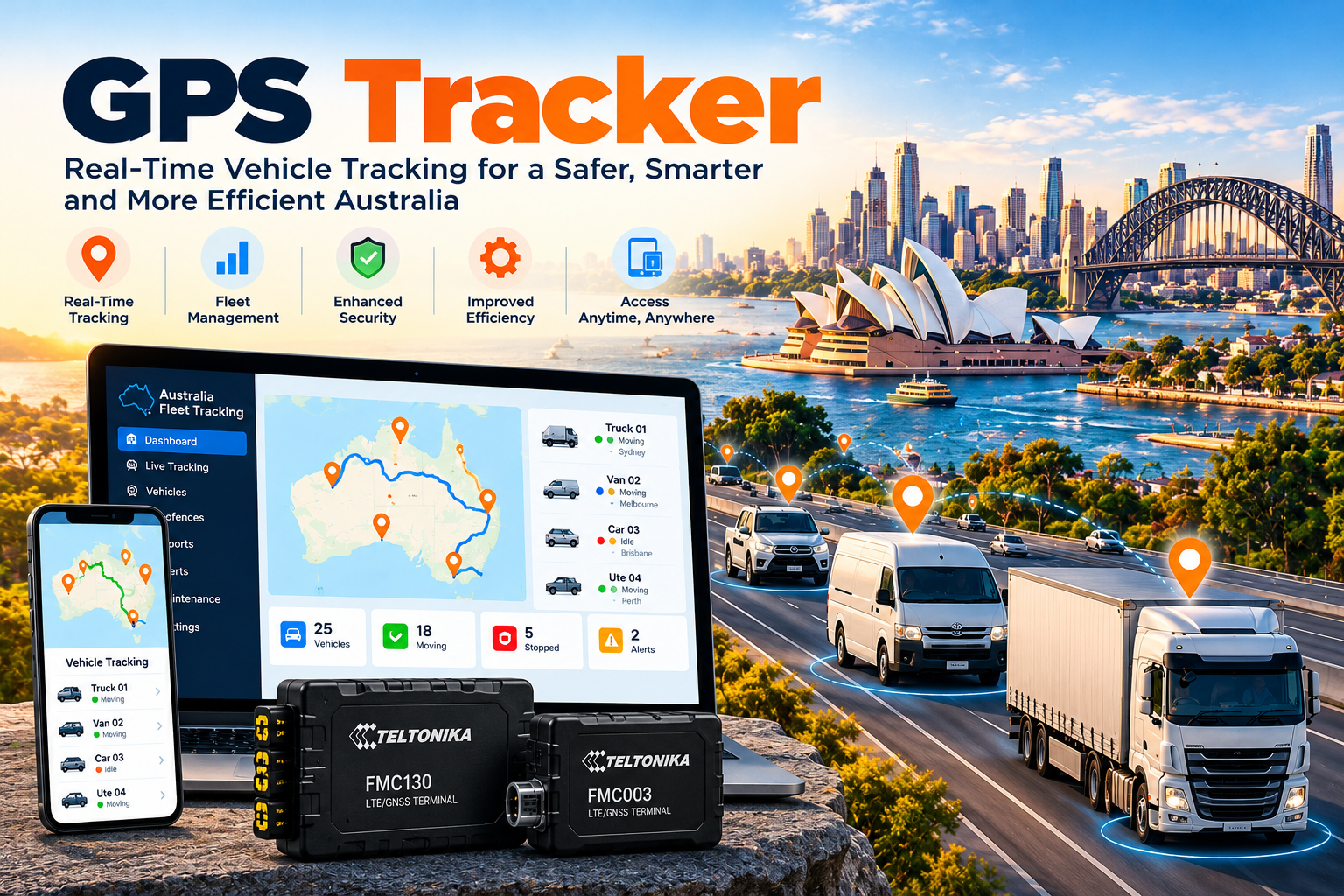
For example, the Teltonika FMC003 and FMC130 are LTE-capable GNSS tracking devices, but they serve different installation and application needs. Review the official specifications and confirm compatibility with your chosen tracking platform before selecting either model.
Australia Fleet Tracking can be a starting point for exploring GPS tracking products and suitable solutions for commercial vehicle applications.
Do not choose a device based on model name alone. Confirm network support, installation requirements, connectivity costs and software compatibility for your specific use case.
GPS Tracking, Privacy and Compliance
Businesses should consider privacy when tracking vehicles used by employees or customers. Explain what information is collected, why it is collected and who can access it.
Use appropriate access controls and data retention practices. Check relevant Australian privacy laws, workplace surveillance requirements and state or territory rules before implementing a tracking system.
Requirements may vary depending on the business and how the vehicle is used.
Frequently Asked Questions
What is the best GPS tracker for a car in Australia?
The best option depends on the vehicle, installation method, network compatibility, tracking features and software requirements. Compare these factors before purchasing.
Can a GPS tracker show a vehicle’s live location?
A compatible GPS tracker can provide location updates through a connected platform. How frequently the location refreshes depends on the device, configuration and network availability.
Do GPS trackers work in regional Australia?
GPS positioning can work in many locations, but transmitting data depends on the device’s connectivity. Check network coverage along your vehicle routes, particularly in remote areas.
Can businesses track multiple vehicles at once?
Yes. Compatible trackers connected to fleet tracking software can allow authorised users to monitor multiple vehicles from one dashboard.
Does a GPS tracker reduce fuel costs?
Tracking data may help businesses review routes and driving patterns. Savings are not guaranteed and depend on how the business uses the information.
Conclusion
A GPS tracker can help Australian businesses improve vehicle visibility, review trip history and make more informed fleet management decisions. The right solution depends on your vehicles, connectivity requirements, installation preferences and operational goals.
Before choosing a device, compare its specifications, software compatibility and ongoing costs. Australia Fleet Tracking can help businesses explore GPS tracking hardware and solutions suited to their requirements.
Investing in an appropriate tracking setup can support better fleet visibility and more organised vehicle operations.