The best truck GPS tracker helps businesses monitor vehicle locations, review trip history, improve fleet visibility and respond to unexpected vehicle movements. The right device depends on your truck type, tracking requirements, network coverage and budget. For Australian transport companies, delivery businesses and fleet managers, a reliable GPS tracking system can make daily operations easier to manage. Australia Fleet Tracking helps businesses explore GPS tracking products suited to their vehicles and operational needs. Before buying, compare location updates, connectivity, alerts, installation requirements and software features rather than choosing a tracker on price alone.
What Is Truck GPS Tracking Device?
A truck GPS tracking device uses satellite positioning to determine a vehicle’s location. It then sends location data through a supported communication network to tracking software, where authorised users can view the information.
Depending on the model, a truck tracking system may also record trip history, detect ignition activity, monitor movement and support driver behaviour reports.
These features help fleet managers understand where trucks travel and how vehicles operate throughout the day. Instead of calling drivers for every location update, managers can check a central dashboard and plan their next steps.
Key Features to Look
1. Real-Time Location Tracking
Real-time tracking gives fleet managers access to recent vehicle location updates through a computer or mobile device. This helps businesses check truck positions, coordinate deliveries and respond to changes in schedules.
However, real-time does not always mean continuous updates every second. Reporting frequency depends on the device settings, network availability and tracking platform.
Choose a tracker that offers an update interval suitable for your operations. Frequent updates may suit time-sensitive deliveries, while less frequent reporting may work for vehicles with simpler monitoring needs.
2. Network Connectivity
Connectivity determines how a GPS tracker sends information to its software platform. Many commercial trackers use cellular networks, while some specialised systems support other communication methods.
Australian businesses should check supported network bands and coverage across their operating routes. This matters for trucks travelling between major cities, regional towns and remote work sites.
For example, Teltonika’s FMC130 GPS tracker supports 4G LTE Cat 1 connectivity and GNSS positioning. Always confirm the exact model variant, local network compatibility and current availability before purchasing.
3. Trip History and Route Monitoring
Trip history allows managers to review previous journeys, including recorded routes and travel times where the platform supports these details.
This information can help transport companies investigate delays, compare planned routes with actual journeys and answer customer questions about delivery progress.
Route records can also reveal repeated detours or unnecessary trips. The goal is not to turn every driver into a contestant in a navigation game; it is to understand where practical improvements can help.
4. Geofencing and Movement Alerts
Geofencing lets users create virtual boundaries around depots, warehouses, delivery locations or construction sites.
When a compatible tracker reports that a truck has entered or left a defined area, the system can send an alert. Managers can use these notifications to review vehicle movements and coordinate site arrivals.
Movement alerts can also help identify unexpected activity outside working hours. However, alerts do not prevent theft or guarantee vehicle recovery. Businesses still need clear procedures for responding to unusual events.
5. Ignition and Vehicle Activity Monitoring
Some GPS trackers can detect ignition status or other vehicle activity through supported inputs and sensors. This helps fleet managers understand when a truck starts operating and compare vehicle activity with trip records.
Selected devices may also support engine data, fuel monitoring or additional sensors through compatible interfaces. These features vary by model and installation.
For example, Teltonika’s FMC130 supports multiple inputs and outputs for configurable tracking applications. Check the official documentation to confirm which functions suit your vehicle.
6. Alerts and Driver Behaviour Insights
A suitable tracking platform may provide alerts for speeding, excessive idling, towing or other configured events. Some devices also support driving behaviour scenarios.
These features can help fleet managers identify patterns that require attention. For instance, repeated excessive idling may prompt a review of operating procedures or vehicle use.
Use tracking data fairly and in context. A single alert does not always explain why an event occurred, so discuss recurring concerns with drivers before making decisions.
7. Easy Installation and Reliable Power
Truck GPS trackers commonly use the vehicle’s electrical supply. Some models also include a backup battery to support selected functions during a power interruption.
Before installation, check the required voltage range, wiring, mounting location and compatibility with the truck’s electrical system. Professional installation can help reduce wiring errors and prevent interference with vehicle systems.
Consider the installation cost alongside the device price. A low-cost tracker may not be the cheapest option once installation, configuration and ongoing support enter the picture.
8. Tracking Software and Reporting
The tracking dashboard should make everyday tasks straightforward. Look for clear vehicle maps, trip reports, configurable alerts, user permissions and data export options.
If your business already uses fleet management or transport software, check whether the tracking platform offers a documented API or another compatible integration method.
Good software turns raw location data into useful operational information. Without it, even a capable tracker can feel like a map that never quite answers the question you asked.
Benefits of GPS Tracking for Truck Fleets
Better Fleet Visibility
A central dashboard helps managers review the locations of multiple trucks without contacting each driver individually. This can support dispatch decisions and improve coordination across depots.
Improved Delivery Planning
Location updates and trip history help teams understand vehicle progress and identify potential delays. Businesses can use this information to communicate more accurately with customers.
Stronger Vehicle Security
Geofencing, movement alerts and location history can support a quicker response to suspicious activity. They can also help businesses investigate missing vehicles or unexpected movements.
More Informed Fleet Decisions
Tracking reports can help managers review vehicle use, idling patterns and route choices. Over time, these insights may support better planning and resource allocation.
Actual results depend on data quality, device configuration, network coverage and how consistently the business uses the information.
How to Choose the Right Truck GPS Tracker
Before selecting a device, ask these questions:
- What do you need to monitor? Basic location tracking may be enough for some trucks, while larger fleets may need ignition inputs, alerts and detailed reports.
- Where do your trucks operate? Confirm network coverage across your actual routes.
- How frequently do you need updates? Match reporting intervals to delivery schedules and operational risks.
- Does the device suit your truck? Check voltage, installation requirements and compatible interfaces.
- What is the total cost? Include hardware, installation, subscriptions, connectivity and technical support.
- Can the system grow with your fleet? Check whether it can accommodate additional vehicles, users and integrations.
Compare products against these requirements before making a decision.
Why Consider Teltonika GPS Trackers?
Teltonika produces GPS tracking devices for vehicle monitoring and fleet telematics. Depending on the model, its products support features such as GNSS positioning, cellular connectivity, configurable inputs and outputs, and selected vehicle monitoring functions.
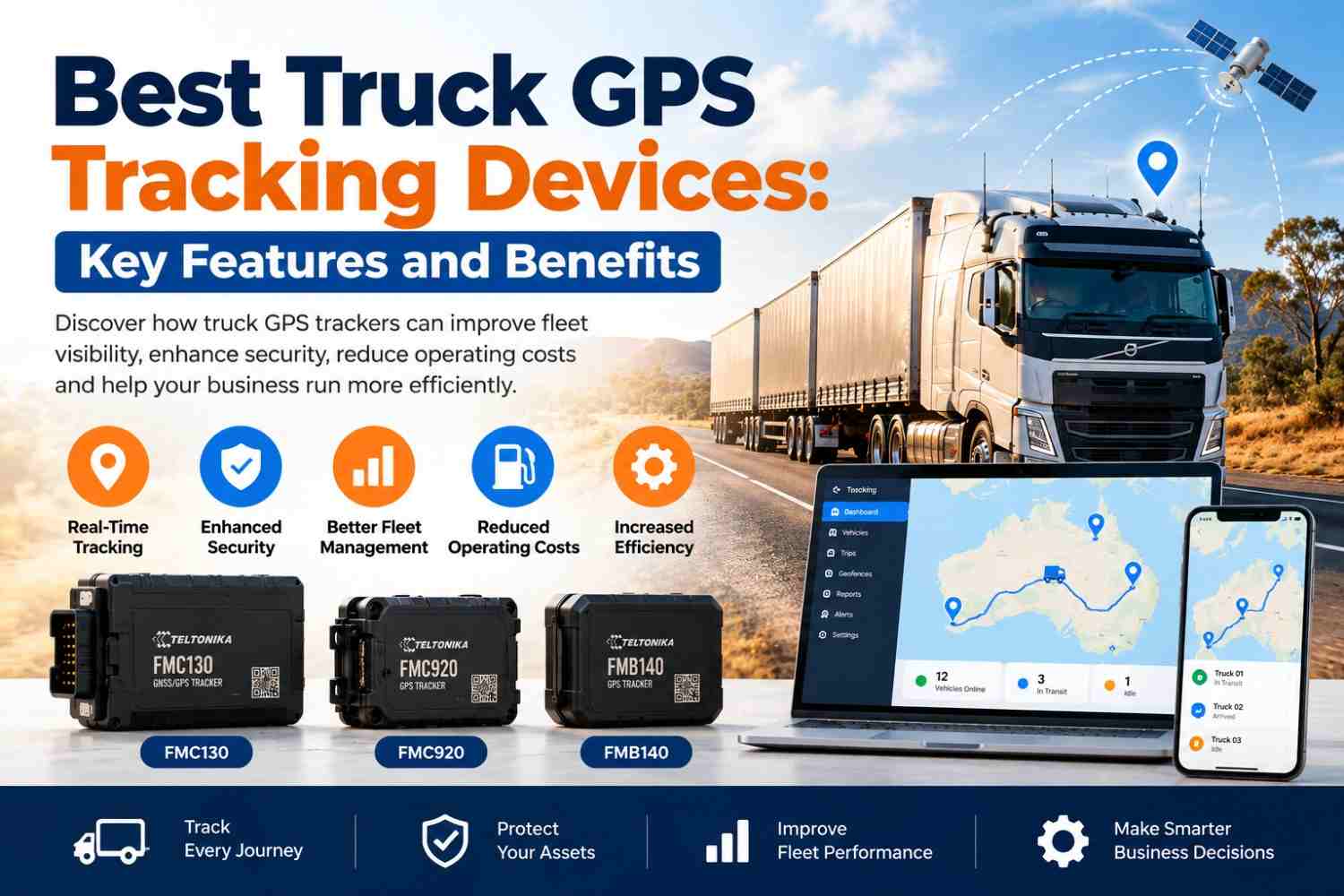
For example, the FMC130 offers flexible interfaces for different tracking applications, while the FMC920 provides a compact design and 4G LTE connectivity. Their specifications differ, so compare supported features and network variants before selecting a device for your trucks.
Australia Fleet Tracking can help businesses explore GPS tracking options based on their fleet requirements. Confirm product availability and Australian network compatibility before ordering.
Conclusion
The best truck GPS tracking device is one that fits your vehicles, routes, monitoring needs and budget. Features such as location updates, trip history, geofencing, ignition monitoring and useful reporting can help businesses improve fleet visibility and coordinate daily operations.
Start by identifying your main tracking requirements, then compare compatible devices and software platforms. For Australian businesses, checking cellular coverage and installation requirements is especially important when trucks travel across regional areas.
Explore the GPS tracking device range at Australia Fleet Tracking to review available options, or contact the team for help choosing a suitable solution.