what is a GPS tracker?
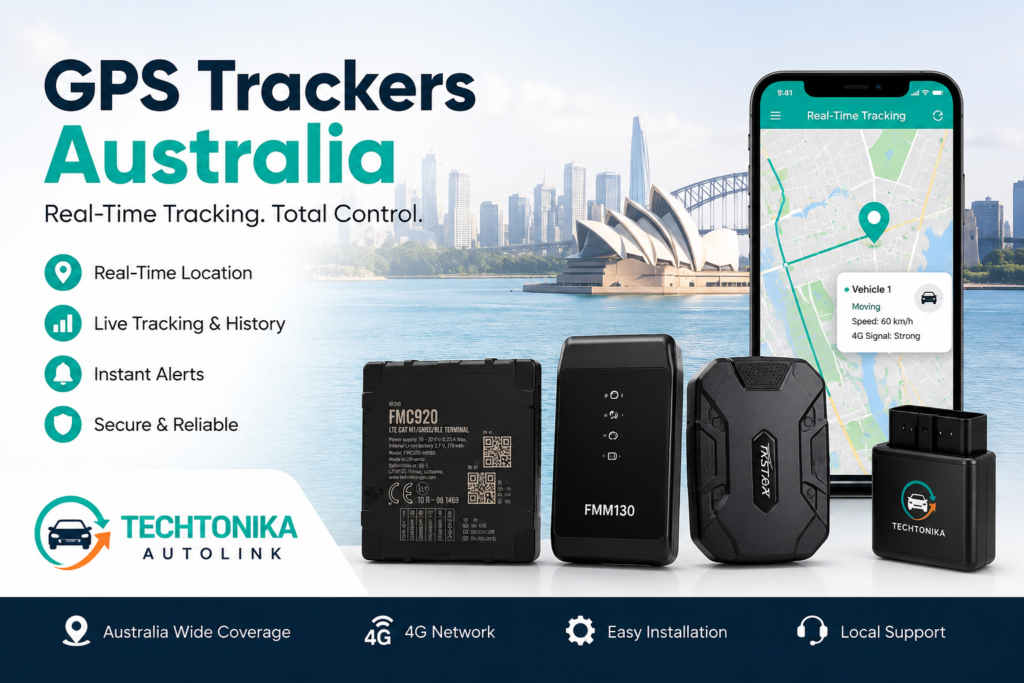
A GPS tracker is a small electronic device that determines its position using signals from navigation satellites and then records or transmits that position to an app or web platform. In a vehicle, it can show current location, trip history, speed, ignition status and movement events. Depending on the hardware and installation, it may also support geofences, driver identification, maintenance reminders, fuel or sensor data, and controlled immobilisation by an appropriately designed system. For most buyers looking for GPS Trackers Australia in 2026, the practical choice is a 4G-compatible tracker connected to a dependable tracking platform.
Australia’s 3G shutdown was completed in 2024, so older 3G-only equipment should not be purchased for new installations. A tracker also needs the right power source, suitable mobile coverage, sensible placement and a service plan that matches how frequently it reports.
The best device is not automatically the most expensive. A private car, rental fleet, caravan, trailer, truck and unpowered excavator have different power, reporting, concealment and durability needs. This guide explains those differences so you can choose based on the asset and the outcome—not marketing claims.
GPS tracking in Australia at a glance
| Question | Practical answer |
| What should I buy in 2026? | A 4G LTE, LTE-M or other currently supported Australian-network device; avoid 3G-only trackers. |
| Does GPS need mobile internet? | Satellite positioning does not, but live app updates normally require mobile data or another communication link. |
| Which type suits a car? | Hardwired for permanent security or fleet use; OBD for fast installation; battery-powered for portable or unpowered assets. |
| How accurate is it? | Often within several metres outdoors in good conditions, but buildings, tunnels, placement and signal reflections can reduce accuracy. |
| Is there an ongoing cost? | Usually yes. Live tracking commonly requires a SIM/data connection, platform access, support and data storage. |
| Can employers track work vehicles? | Potentially, but workplace surveillance, privacy and notification requirements vary by jurisdiction and circumstances. |
How does a GPS tracker work?
Despite the familiar name, many modern devices use a Global Navigation Satellite System (GNSS) receiver rather than GPS alone. GPS is the United States satellite constellation; compatible hardware may also use constellations such as Galileo, GLONASS or BeiDou. More visible satellites can improve the device’s ability to calculate a position, particularly when the view of the sky is imperfect.
The four-part tracking chain
- Satellites broadcast precise timing and orbital information. The tracker receives these one-way signals; it does not transmit back to the satellites.
- The tracker calculates its location from multiple satellite signals and adds device information such as time, speed, heading, ignition or sensor status.
- A communications modem sends the data, most commonly over a mobile network using a SIM. Some specialised systems use satellite communications, Wi-Fi or short-range technologies.
- A tracking platform converts the data into a map, trip history, alerts, reports and administrative tools accessible through a phone or computer.
This distinction explains a common question: a tracker can often calculate or store a location when it has no mobile service, but it cannot usually deliver that location to your phone in real time until communication returns. A properly configured device may buffer records internally and upload them later. The size of that buffer, update rules and reconnection behaviour vary by model and platform.
Why Australians use GPS trackers
Vehicle security and theft response
A tracker can notify an owner when a parked vehicle moves, leaves an approved area or has its ignition switched on. If a vehicle is stolen, current location and recent route information may help the owner provide useful information to police. A tracker does not prevent theft by itself, guarantee recovery or replace locks, alarms, insurance and sensible key security. It is one layer in a broader security plan.
Fleet visibility and productivity
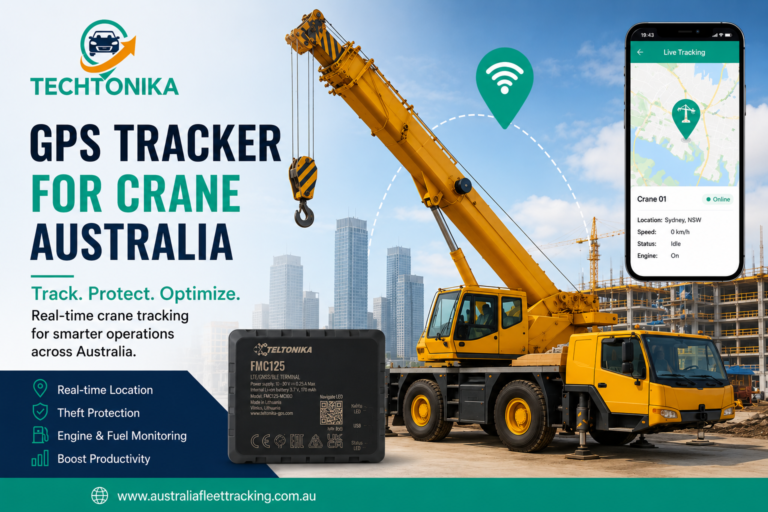
Businesses use tracking to see which vehicle is closest to a job, verify arrival and departure times, reduce avoidable kilometres, review unauthorised use and answer customer questions with better evidence. A well-designed system can replace phone calls and manual vehicle checks with live status, automated reports and exception alerts.
Safety, maintenance and compliance support
Tracking data can support speeding alerts, harsh-driving events, service reminders based on distance, fatigue-management workflows and incident investigation. It should be treated as operational evidence, not as an infallible record. Device configuration, input wiring, network delays, satellite conditions and data quality all influence what a report means.
Assets, trailers and equipment
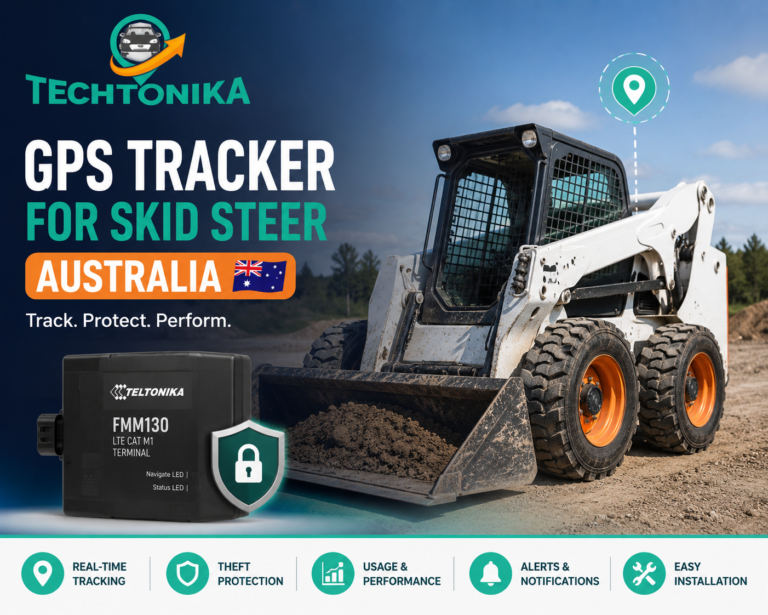
Battery-powered trackers are useful where permanent vehicle power is unavailable or where installation must remain portable. Typical applications include trailers, caravans, boats, containers, generators, excavators and other plant. These deployments often prioritise long sleep time, movement-triggered reporting, weather resistance and tamper alerts over second-by-second tracking.
The main types of GPS tracker
| Tracker type | Best for | Strengths | Trade-offs |
| Hardwired | Cars, vans, trucks and permanent fleets | Hidden, continuous vehicle power, rich ignition/input data | Professional installation may be preferable; not easily moved |
| OBD plug-in | Quick car or light-commercial deployment | Fast installation, easy transfer between compatible vehicles | Visible and removable; OBD port fit and vehicle compatibility matter |
| Battery-powered / magnetic | Trailers, plant, temporary tracking | Portable, no vehicle wiring, flexible placement | Requires charging or battery replacement; update frequency affects battery life |
| Heavy-duty telematics | Trucks, machinery and complex fleets | More inputs, CAN/sensor options and advanced reporting | Higher device and installation complexity |
Hardwired GPS trackers
A hardwired unit connects to vehicle power and is normally concealed behind trim or within the dashboard area. Basic installations use permanent power and earth; more capable installations may add ignition detection and selected inputs or outputs. This type is usually the strongest option for long-term vehicle security and fleet management because it is difficult to notice, does not rely on regular charging and can report consistently while installed correctly.
Quality hardwired devices often include an internal backup battery. This can send a power-disconnection alert and keep the tracker operating temporarily if main power is removed. Backup capacity is not the same as the multi-month life of a dedicated battery tracker.
OBD GPS trackers
An OBD tracker plugs into the diagnostic port found in most modern passenger vehicles. It suits trials, short-term fleet deployments, dealer stock and buyers who want installation without cutting or joining wires. The drawbacks are equally clear: the port may be visible, the device can be removed quickly, and some vehicles have awkward port locations. For anti-theft use, a concealed hardwired installation is normally harder to defeat.
Battery-powered and magnetic GPS trackers
These devices contain their own battery and may attach to a metal surface using strong magnets. Their advertised battery life must be interpreted cautiously. A unit waking only after occasional movement may operate for months; the same unit reporting frequently on a vehicle used every day may require charging far sooner. Temperature, mobile signal strength, battery age and alert settings also matter.
Magnets do not make every mounting position safe. The tracker needs protection from road debris, water, heat and accidental detachment, plus enough radio transparency for satellite and mobile signals. Never place a device where it could interfere with steering, pedals, airbags, brakes, fuel systems or moving components.
What to look for when buying a GPS tracker in Australia
1. Australian mobile-network compatibility
Network compatibility is the first filter. Australia’s 3G networks have closed, making 3G-only trackers obsolete for normal mobile-connected use. Look for supported 4G technologies and frequency bands suitable for the intended carrier and location. LTE Cat 1, LTE Cat M1/LTE-M and, in some use cases, NB-IoT devices can all be described as 4G, but they are not interchangeable. Confirm the exact model, bands, SIM arrangement and network support rather than relying on a generic ‘4G’ label.
Coverage also matters outside metropolitan areas. No mobile tracker has coverage everywhere. In weak-signal regions, antenna design, device placement, network choice and store-and-forward capability become more important. ACMA’s standardised mobile coverage maps introduced in 2026 can help consumers compare published 4G and 5G coverage categories, but real-world performance still varies with terrain, buildings and installation.
2. Tracking interval and event logic
An update every few minutes may be adequate for theft alerts or general asset visibility. Dispatch, live operations and detailed route reconstruction may benefit from shorter intervals or distance- and turn-based reporting. Faster reporting increases mobile data, server load and battery consumption. Good configuration sends useful detail while moving and reduces unnecessary messages when parked.
3. Platform quality
The app and web platform often matter more than a small difference in hardware specifications. Check live-map clarity, trip playback, geofences, alert controls, user roles, reporting, exports, mobile apps and data retention. Fleet buyers should also consider API access, maintenance tools, driver management and whether multiple device types can be managed in one account.
4. Power and battery strategy
For powered vehicles, choose between hardwired and OBD based on security, installation and portability. For unpowered assets, calculate battery life from the expected movement and reporting pattern—not the maximum headline figure. Ask what happens when the battery is low, whether sleep modes are configurable and how the device is charged or replaced in the field.
5. Installation quality and concealment
A well-specified tracker can perform poorly when placed behind heavy metal, near interference, exposed to water or connected to an unsuitable circuit. Permanent installations should be electrically safe, mechanically secure and serviceable. If an immobilisation output is involved, it requires particularly careful design: the system must not create an unsafe shutdown while a vehicle is moving, and installation should be handled by a competent professional using an appropriate relay and vehicle-specific method.
6. Alerts that match the objective
- Movement, ignition and tow alerts for parked-vehicle security.
- Geofence entry and exit alerts for depots, customer sites or restricted areas.
- Power-disconnection and low-battery alerts for tamper or maintenance awareness.
- Speed and driving-event alerts for fleet safety programs.
- Service-distance and registration reminders for operational administration.
7. Data ownership, privacy and support
Ask where tracking data is stored, how long it is retained, who can access it and how users are removed when staff change. Strong passwords, appropriate user permissions and prompt account offboarding are basic controls. Local support is valuable when an installation, network or configuration issue must be diagnosed across the hardware, SIM and software layers.
8. Total cost rather than device price
The sticker price is only one component. Compare hardware, SIM/data, platform subscription, installation, accessories, warranty, support, replacement and cancellation terms. A low-cost tracker attached to an unreliable app or unsupported network may cost more in downtime and reinstallation than a properly supported solution.
Which GPS tracker is right for you?
| Use case | Recommended starting point | Why |
| Private car security | Concealed 4G hardwired tracker with backup battery | Always powered, discreet and suitable for movement/power alerts |
| Easy self-installation | Compatible 4G OBD tracker | Quick to install and move, with no permanent wiring |
| Rental or company fleet | Hardwired tracker with ignition, trip history, geofences and reports | Reliable daily data and stronger tamper resistance |
| Trailer or caravan | Weather-resistant long-life battery tracker; hardwired if auxiliary power is dependable | Matches intermittent use and unpowered periods |
| Truck or machinery | Heavy-duty tracker with suitable voltage range, inputs and telematics features | Supports demanding electrical environments and richer operational data |
| High-value asset in remote areas | Battery tracker with strong storage/reconnection behaviour; consider satellite communication where mobile coverage is insufficient | Reduces dependence on continuous terrestrial mobile coverage |
GPS tracker installation: what to expect
Before installation
- Confirm the device model, network and SIM are active.
- Decide which outcomes are required: location only, ignition, alerts, inputs, driver ID or immobilisation.
- Check the vehicle voltage, electrical system and warranty considerations.
- Choose a concealed but radio-friendly, dry and serviceable location.
- Record the device identity and which vehicle or asset it belongs to.
After installation
Test more than a dot on the map. Confirm the tracker detects ignition correctly, reports while driving, enters sleep when expected, reconnects after poor coverage and generates each required alert. Drive the vehicle through a short route and compare the trip record with reality. For fleet rollouts, use a consistent commissioning checklist and photograph or document the installation location for authorised maintenance staff.
Plug-in devices are usually simple, but verify that the OBD tracker is secure and cannot obstruct the driver. Battery devices should be fully charged, safely mounted and tested in their final position. A tracker may appear accurate on a workbench near a window yet perform differently under a vehicle or inside a steel enclosure.
How accurate are GPS trackers?
Consumer and commercial vehicle trackers commonly locate within several metres in good outdoor conditions. Accuracy is not a fixed promise. A clear view of the sky, multiple satellite constellations and good antenna placement improve results. Urban canyons, covered parking, tunnels, dense foliage, metal enclosures and reflected signals can cause drift, delayed fixes or apparently impossible points.
The map itself can also create confusion. Satellite imagery and road layers may not be perfectly aligned, while a platform may simplify a route or report the last known point during a communication gap. High-accuracy surveying systems can achieve far greater precision using correction services and specialist equipment, but that is a different category from ordinary vehicle tracking. For operational decisions, interpret tracker data with its timestamp, satellite quality, speed and surrounding events.
Do GPS trackers work without internet or mobile coverage?
The positioning receiver does not need the public internet to listen to satellite signals. Live remote viewing normally does. When the mobile connection disappears, a tracker may continue calculating positions and saving them internally. Once coverage returns, it can upload stored records if its firmware and platform support that behaviour.
This means a coverage gap is not always a tracking gap, but it is usually a live-visibility gap. Buyers operating in remote Australia should ask how many records the tracker stores, what triggers reconnection, whether the SIM can use an appropriate network and whether a satellite-connected device is justified. Satellite communication can extend reach but usually increases hardware and service costs and may offer different update capabilities.
GPS tracking laws and privacy in Australia
GPS trackers have legitimate uses, but ownership of a device does not automatically authorise every form of tracking. Laws differ by state and territory and depend on factors such as who owns the vehicle, who is being monitored, whether tracking is covert, whether the person is at work and how the information is collected, used and disclosed.
For workplaces, the Office of the Australian Information Commissioner advises employers to follow relevant Australian, state and territory surveillance and monitoring laws. In New South Wales, the Workplace Surveillance Act 2005 expressly covers tracking surveillance and contains notification and other requirements. Other jurisdictions take different approaches. Businesses should provide clear policies and notices, limit collection to a genuine purpose, restrict access, retain data only as needed and seek legal advice for their specific operations.
Do not secretly place a tracker on another person’s vehicle or property on the assumption that the technology makes it lawful. If you are dealing with suspected theft, family violence, stalking, employee misconduct or another sensitive situation, obtain appropriate police or legal guidance. This section is general information, not legal advice.
Common mistakes to avoid
- Buying a 3G-only tracker because it is heavily discounted.
- Choosing by advertised battery life without checking the reporting schedule used for that claim.
- Assuming GPS and mobile coverage are the same thing.
- Mounting a tracker under metal or in an exposed, unsafe location.
- Selecting an OBD device for covert security when the port is obvious and accessible.
- Ignoring the quality, retention and usability of the tracking platform.
- Enabling too many alerts until users start ignoring all of them.
- Tracking employees without reviewing applicable notice, surveillance and privacy obligations.
- Treating a tracker as a substitute for insurance, locks, alarms or safe fleet policies.
- Installing immobilisation without an appropriate safety design and professional assessment.
How Australia Fleet Tracking can help
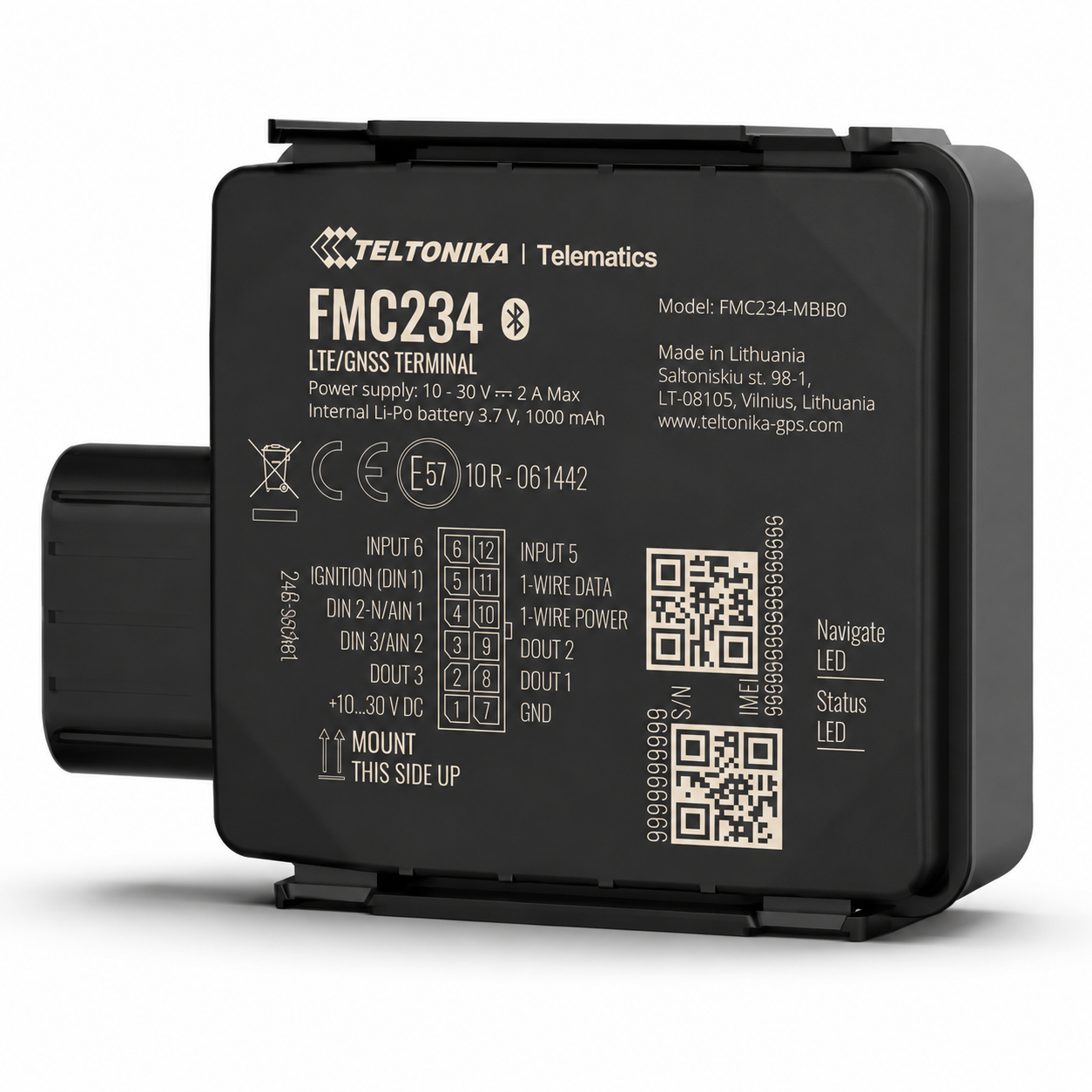
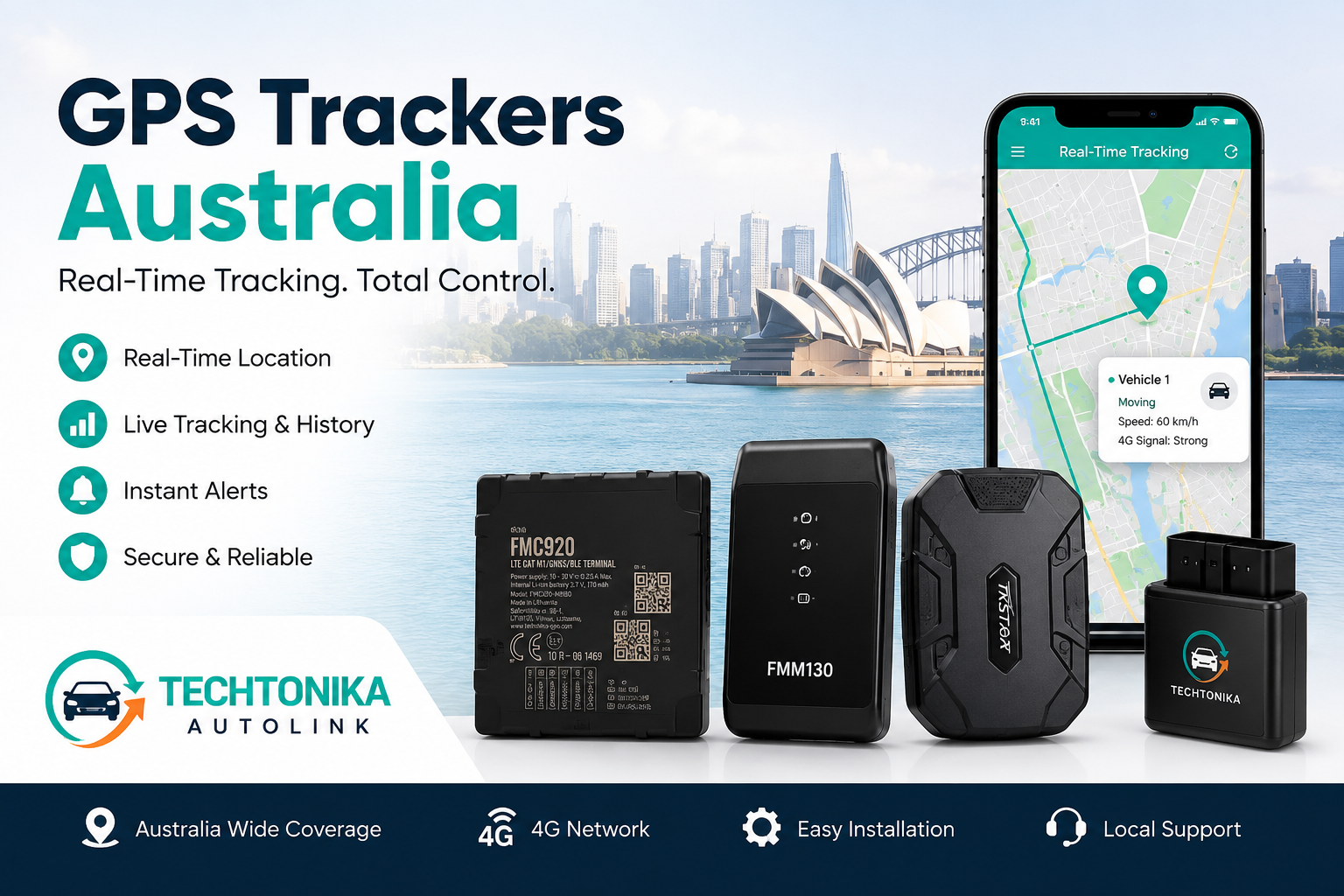
Australia Fleet Tracking supplies GPS tracking and telematics solutions for private vehicles, fleets, trucks and assets, with access to professional installation and local support. The available range includes compact vehicle trackers, OBD solutions, advanced Teltonika telematics devices and battery-powered options for assets where fixed power is unavailable.
The right starting point is a short requirements check: what is being tracked, where it operates, whether it has reliable power, how quickly updates are needed, which alerts matter and who needs access to the data. That prevents overbuying features while ensuring the device, mobile connection, platform and installation work as one system.
For product selection or installation advice, visit https://australiafleettracking.com/, call 0452 653 745, or email info@techtonika-autolink.com. Australia-wide delivery is available, with local assistance from West Ryde, New South Wales.
Frequently asked questions
What is the best GPS tracker for a car in Australia?
For permanent security and reliable daily tracking, a concealed 4G hardwired tracker with backup battery is usually the strongest starting point. An OBD tracker is better when fast, non-permanent installation is the priority.
Can I use an old 3G GPS tracker in Australia?
Australia’s 3G network shutdown was completed in 2024. A 3G-only tracker should generally be replaced with a compatible 4G device and service.
Does a GPS tracker need a SIM card?
Most live vehicle trackers use a SIM or embedded mobile service to send data to the platform. A logger can store locations without a SIM, while specialised devices may use satellite or other communications.
Will a GPS tracker drain my car battery?
A properly installed and configured tracker uses a small amount of power and should enter a low-power mode when parked. Battery condition, wiring and configuration still matter, especially for vehicles left unused for long periods.
Can a thief detect or remove a GPS tracker?
Any physical device may eventually be found. Concealed hardwired installation, power-disconnection alerts and a backup battery can make removal harder and provide earlier warning, but no tracker is impossible to defeat.
Can GPS work inside a garage?
It may work near openings or through light structures, but metal roofs, reinforced concrete and underground parking can block or reflect satellite signals. The platform may show the last reliable location until the device gets a new fix.
How often does a GPS tracker update?
It depends on device and plan settings. Updates may be based on time, distance, turns, ignition or movement. Faster intervals provide more detail but can consume more data and battery.
Is a magnetic GPS tracker better than a hardwired tracker?
A magnetic battery tracker is better for portability and unpowered assets. A hardwired tracker is generally better for permanent vehicle use, continuous power, concealment and fleet data.
Is GPS tracking legal in Australia?
It can be lawful for legitimate purposes, but surveillance, workplace, privacy and tracking-device rules vary. Review the laws applying to your jurisdiction and circumstances rather than assuming vehicle ownership provides unlimited permission.
Can one app track several vehicles?
Yes. Fleet platforms commonly display many vehicles and assets in one account, with groups, permissions, alerts and reports for different users.
Final checklist
- Choose current Australian-compatible 4G hardware.
- Match hardwired, OBD or battery power to the asset.
- Check actual mobile coverage and offline data storage.
- Compare the platform, alerts, reports and support—not only the device.
- Budget for hardware, installation and ongoing connectivity/platform service.
- Test the complete system after installation.
- Document authorised users and applicable privacy or employee-notification processes.
A good GPS tracking system is not simply a box attached to a vehicle. It is a coordinated service made up of satellite positioning, reliable hardware, mobile connectivity, useful software, correct installation and responsible data practices. Get those elements right and the tracker becomes a practical security and operations tool rather than another device that nobody checks.
Sources and editorial references
- Australian Communications and Media Authority, ‘3G network switch off’: https://www.acma.gov.au/3g-network-switch
- Australian Communications and Media Authority, ‘New telco transparency rules now in force’ (30 June 2026): https://www.acma.gov.au/articles/2026-06/new-telco-transparency-rules-now-force
- Geoscience Australia, Positioning and navigation: https://www.ga.gov.au/scientific-topics/positioning-navigation
- Office of the Australian Information Commissioner, Workplace monitoring and surveillance: https://www.oaic.gov.au/privacy/your-privacy-rights/surveillance-and-monitoring/workplace-monitoring-and-surveillance
- NSW Legislation, Workplace Surveillance Act 2005: https://legislation.nsw.gov.au/view/html/inforce/current/act-2005-047/lh
- Australia Fleet Tracking product and service information: https://australiafleettracking.com/
Techtonika Autolink
Follow Us
Facebook: https://www.facebook.com/profile.php?id=61591321884124
Instagram: https://www.instagram.com/techtonikaautolink/
LinkedIn: https://au.linkedin.com/company/techtonika-autolink
Unit 507, 15 Chatham Rd West, Ryde NSW 2114