Keyless entry makes driving more convenient, but it can also introduce security risks if your vehicle’s smart key system is targeted by thieves. Across Australia, car owners are increasingly interested in understanding how keyless car theft works and what they can do to protect their vehicles.
The good news is that a few practical precautions can help reduce the risk. From protecting your car keys to installing a GPS tracker, there are several ways to strengthen your vehicle’s security.
In this guide, you’ll discover how to prevent keyless car theft in Australia, how relay attacks work, and which security measures are worth considering for your vehicle.
What Is Keyless Car Theft?
Keyless car theft occurs when criminals exploit weaknesses in a vehicle’s keyless entry or starting system to gain access to the car or start its engine without the owner’s permission.
Many modern vehicles use a smart key or key fob that communicates wirelessly with the car. When the vehicle detects an authorised key nearby, it may unlock the doors or allow the engine to start.
Although these systems are designed for convenience, some can be vulnerable to electronic attacks. The specific risks depend on the vehicle’s technology, security features, and configuration.
Understanding these risks is the first step towards preventing keyless car theft.
How Do Keyless Car Relay Attacks Work?
A relay attack is one method criminals may use against certain keyless entry systems. It involves relaying communication between a vehicle and its authorised key fob, potentially making the car believe that the key is nearby.
For example, if a car is parked outside a home and its smart key is kept close to the front door, criminals may attempt to relay the key’s signal to the vehicle.
If the attack succeeds, the vehicle may unlock or allow the engine to start without the owner physically presenting the key at the car.
However, not every keyless vehicle is equally vulnerable. Security protections vary between manufacturers and models, so it is important to check the recommendations for your specific vehicle.
8 Practical Ways to Prevent Keyless Car Theft in Australia
The best approach combines sensible everyday habits with security features suited to your vehicle. Here are eight practical ways to help protect your car.
1. Store Your Car Keys Away From Doors and Windows
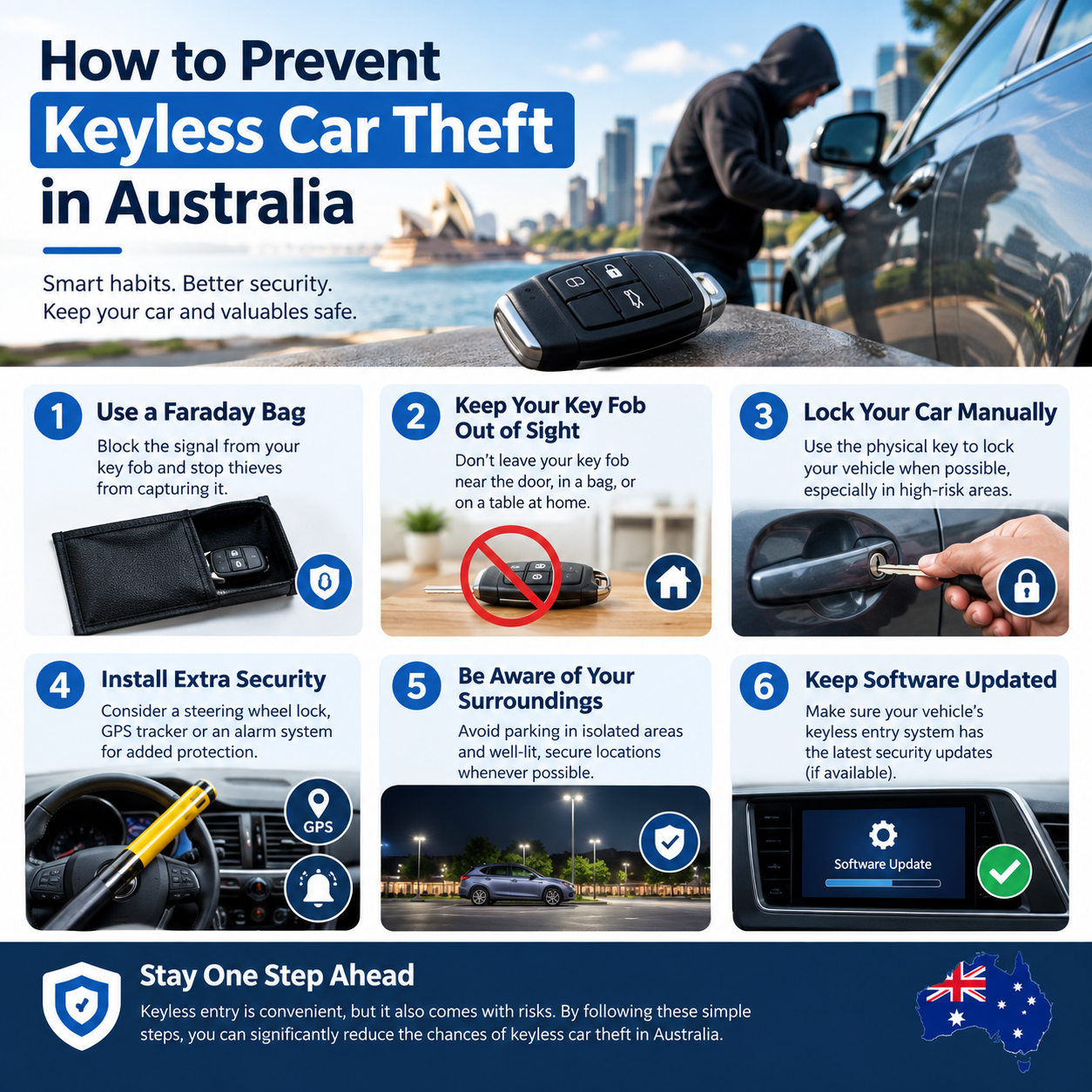
One of the simplest ways to improve keyless car security is to keep your smart keys away from external doors and windows.
When keys are stored close to an outside wall or entrance, they may be easier for criminals to target during a relay attack.
Instead, keep your keys in a secure location deeper inside your home. Avoid leaving them on a hallway table, beside a front door, or near a ground-floor window.
This small change can help reduce unnecessary exposure of your key fob’s wireless signal.
2. Use a Signal-Blocking Pouch for Your Key Fob
A signal-blocking pouch, often called a Faraday pouch, is designed to reduce or block wireless communication from a compatible key fob.
When the pouch works correctly, it can help prevent criminals from relaying the key’s signal while the key is stored inside.
For the best results, choose a pouch suitable for your key type and test it regularly. Follow the manufacturer’s instructions to confirm that the signal is properly blocked.
A signal-blocking pouch is a useful additional precaution, although it should not replace other vehicle security measures.
3. Enable Your Vehicle’s Built-In Security Features
Modern vehicles may include security settings designed to reduce the risk of unauthorised access.
Depending on the make and model, these features may include keyless entry settings, motion-sensing key fobs, automatic locking, or additional anti-theft protections.
Check your owner’s manual or ask your vehicle manufacturer about the available options. Some vehicles allow owners to disable passive keyless entry or activate a sleep mode on compatible keys.
Using the available security features can help strengthen your vehicle’s existing protection.
4. Park in a Secure and Well-Lit Location
Where you park can influence your vehicle’s overall security. Whenever possible, use a locked garage or a secure parking area with suitable lighting.
If you must park outside, choose a visible location and avoid leaving the vehicle in an isolated area for extended periods.
Keep the driveway and surrounding entrances well lit, and consider additional physical security where appropriate.
Although secure parking cannot eliminate the risk of theft, it can form an important part of a broader vehicle protection strategy.
5. Consider a Steering Wheel Lock or Immobiliser
Physical security devices can provide another barrier against vehicle theft.
A steering wheel lock acts as a visible deterrent and makes unauthorised use more difficult. A compatible immobiliser can prevent the engine from starting unless the correct authorisation conditions are met.
Before purchasing an additional device, check compatibility with your vehicle and ensure that any installation follows the manufacturer’s recommendations.
Combining physical security with electronic protections can provide a more comprehensive approach than relying on a single measure.
6. Install a GPS Tracker for Your Car
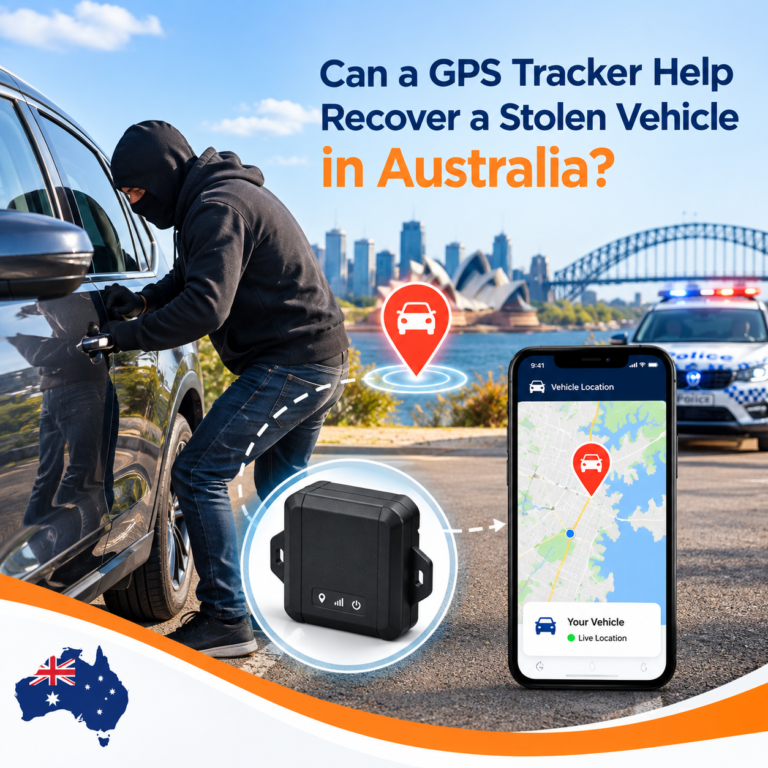
A GPS tracker can help you monitor your vehicle’s location and may assist with recovery if the car is stolen.
Unlike a steering wheel lock or immobiliser, a GPS tracker primarily provides location information rather than physically preventing theft. Its usefulness depends on factors such as installation, power supply, network coverage, and the tracker’s features.
When comparing a GPS tracker for your car in Australia, consider location update frequency, movement alerts, tamper detection, and access to a tracking app.
Guardian Assist offers vehicle tracking solutions, including the TR22 Pro vehicle tracker. Review the product specifications to determine whether it suits your vehicle and security requirements.
7. Activate Vehicle Movement and Tamper Alerts
Vehicle movement alerts can notify you when your car moves under specified conditions. Tamper alerts may notify you if a compatible tracking device detects interference.
These notifications can help you become aware of a potential security incident sooner, especially when your vehicle is parked overnight or left unattended.
However, alerts depend on the device, configuration, power supply, and available connectivity. Make sure notifications are enabled and that you understand what events your system can detect.
For added protection, choose a tracking service with features that match your vehicle’s security needs.
8. Consider Professional Security Monitoring
GPS tracking provides valuable location information, but some drivers want additional support when a security incident occurs.
Professional monitoring services may allow trained operators to assess alerts and coordinate a response according to the service’s procedures.
Guardian Assist offers access to a 24/7 Grade A1 ASIAL-certified Security Response Centre through eligible plans. This can provide an additional monitoring layer beyond checking a vehicle’s location on a smartphone.
Before subscribing, review the plan terms and confirm which monitoring, escalation, and police-coordination services are included.
GPS Tracker vs Steering Wheel Lock: Which Is Better for Car Security?
A GPS tracker and a steering wheel lock serve different purposes. Rather than treating them as direct alternatives, consider how each contributes to vehicle security.
| Feature | GPS tracker | Steering wheel lock |
|---|---|---|
| Shows vehicle location | Yes, subject to device operation and connectivity | No |
| Provides a visible deterrent | Depends on installation and visibility | Yes |
| Physically restricts steering | No | Yes |
| Can provide movement alerts | Supported by compatible devices | No |
| May assist vehicle recovery | Can provide useful location information | Does not provide location data |
For many vehicle owners, a combination of suitable physical security, electronic protections, and GPS tracking may provide more comprehensive coverage than relying on one device alone.
What Should You Do If Your Keyless Car Is Stolen?
If you discover that your car has been stolen, act promptly but do not put yourself at risk.
- Contact the police: Report the theft and provide your registration number, vehicle details, and any available evidence.
- Notify your insurer: Contact your insurance provider and follow its claim requirements.
- Check your GPS tracking service: If a tracker is installed, use the available location information and share relevant details with police.
- Avoid confronting suspected offenders: Do not follow or approach anyone suspected of stealing your vehicle.
- Secure your remaining keys and accounts: Follow the vehicle manufacturer’s guidance if your keys may have been compromised.
If your vehicle has GPS tracking, the location information may assist authorities. However, it does not guarantee recovery, and you should never attempt to retrieve a stolen vehicle yourself.
Why Australian Drivers Should Take Keyless Car Security Seriously
Keyless entry is convenient, but convenience should not come at the expense of security. Drivers should understand their vehicle’s technology and take sensible precautions to reduce avoidable risks.
Protecting smart keys, using secure parking, enabling built-in protections, and considering suitable anti-theft devices can all contribute to a stronger security strategy.
For additional visibility, GPS tracking may help you monitor your vehicle and provide useful information if a theft occurs. Services with professional monitoring can offer further support, depending on the selected plan.
Frequently Asked Questions About Keyless Car Theft
Can thieves steal a keyless car without the original key?
Certain vehicles may be vulnerable to relay attacks, where criminals relay communication from an authorised key fob. However, vulnerability varies by vehicle model and security system.
Does a Faraday pouch prevent keyless car theft?
A properly functioning signal-blocking pouch can help prevent wireless communication with a compatible key fob while it is stored inside. However, it does not protect against every form of vehicle theft.
Can a GPS tracker prevent keyless car theft?
A GPS tracker generally does not physically prevent a vehicle from being stolen. It can provide location information and, depending on the device, movement or tamper alerts that may assist with monitoring and recovery.
Is a steering wheel lock still useful for modern cars?
Yes. A steering wheel lock can act as a visible deterrent and create an additional physical obstacle. It is best considered alongside other appropriate security measures.
Is professional GPS monitoring available in Australia?
Yes, some Australian tracking providers offer professional monitoring services. The features, response procedures, and subscription requirements vary, so review the provider’s terms before choosing a plan.
Final Thoughts: Protect Your Car Against Keyless Theft
Knowing how to prevent keyless car theft in Australia starts with understanding the risks and taking practical steps to reduce them.
Protect your key fob, use your vehicle’s built-in security features, park carefully, and consider additional anti-theft devices. For greater location visibility, a suitable GPS tracker may also form part of your vehicle security plan.
Explore the and the available Guardian Assist plans to learn more about vehicle tracking and monitoring options for Australian drivers.
A layered security approach can help reduce risks, improve awareness, and prepare you to respond more effectively if a vehicle security incident occurs.