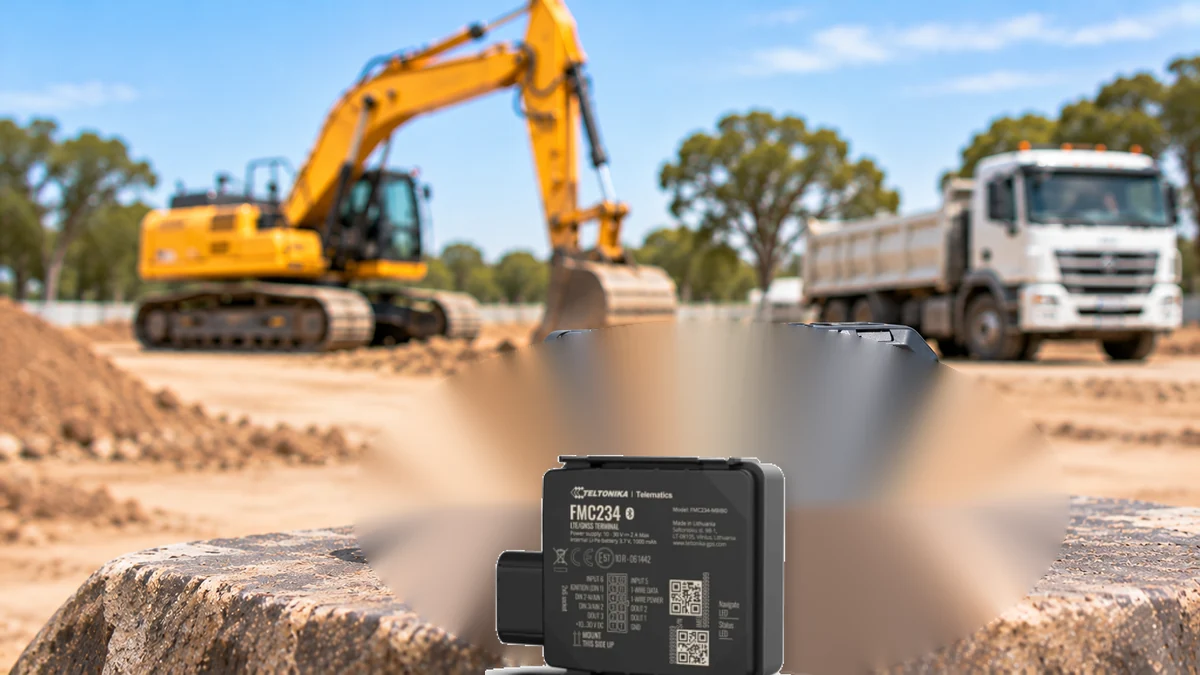
Managing commercial machinery across multiple worksites can be challenging. Construction companies, agricultural businesses, transport operators and industrial organisations often use valuable equipment across different locations. Keeping track of every machine, checking its movement and managing equipment usage requires time and proper planning.
A Commercial Machinery Tracking System helps businesses monitor the location and movement of their equipment through GPS technology. Instead of relying entirely on manual checks, managers can use a tracking platform to view connected machinery and review its location history.
From excavators and bulldozers to generators, loaders and mobile equipment, GPS tracking can give businesses better visibility over their assets.
For Australian businesses operating across construction sites, farms, warehouses and remote areas, machinery tracking can support equipment management and improve operational awareness.
This guide explains how commercial machinery tracking systems work, their key features, business benefits and what to consider before choosing a GPS tracking solution.
What Is a Commercial Machinery Tracking System?
A commercial machinery tracking system is a technology solution that helps businesses monitor the location and movement of machinery and equipment.
It generally uses GPS tracking devices installed on or attached to suitable assets. These devices collect location information and transmit it to a connected tracking platform using an available communication network.
Authorised users can access the platform through a computer or mobile device to check reported machinery locations.
Depending on the tracker and software, a commercial machinery tracking system may offer:
- GPS location monitoring
- Live or scheduled location updates
- Historical location reports
- Movement notifications
- Geofencing alerts
- Multiple equipment monitoring
- Battery or power status information
- Tamper alerts, where supported
- Asset location management
The available features depend on the tracking device, connectivity and software subscription.
Why Do Businesses Need Machinery Tracking?
Commercial machinery represents a significant investment. Losing track of equipment, leaving it at the wrong worksite or spending time locating a machine can affect daily operations.
GPS tracking gives businesses another way to manage their equipment.
1. Monitor Machinery Locations
Businesses may operate equipment across several construction sites, farms or industrial locations.
A GPS tracking system allows authorised staff to check the reported position of connected machinery through a central dashboard.
This can help managers identify where equipment is located without travelling to every site.
2. Improve Equipment Security
Machinery can be left unattended overnight or stored at temporary project locations.
A compatible GPS tracker can send movement notifications when equipment moves under selected conditions.
Geofencing can also help businesses monitor whether machinery enters or leaves a defined area.
These features provide additional visibility, although GPS tracking alone cannot guarantee theft prevention or equipment recovery.
3. Reduce Time Spent Finding Equipment
When machinery moves between worksites, storage yards and project locations, staff may spend time confirming where a particular machine was last used.
Location history can help managers review previous recorded positions and coordinate equipment allocation.
4. Manage Multiple Assets
Businesses with large equipment inventories may find manual tracking difficult.
A suitable platform can display multiple connected machines through one account, helping managers review their locations from a central place.
5. Support Better Equipment Planning
Location information can help businesses understand where equipment is being used and whether it is available at a particular site.
Managers can use this information alongside their existing maintenance, scheduling and asset management processes.
How Does a Commercial Machinery GPS Tracking System Work?
A machinery tracking system usually involves three main stages.
Step 1: Install the GPS Tracking Device
A suitable tracking device is installed on the machinery according to the manufacturer’s instructions.
The device may receive power from the machinery or use its own battery, depending on the model.
Installation requirements vary between excavators, generators, trailers and other equipment.
Step 2: Receive GPS Location Information
The tracker receives signals from navigation satellites and calculates its position.
It then prepares location information for transmission.
Step 3: View Machinery Locations on a Tracking Platform
The device sends its location information through a supported communication network.
The tracking platform processes the information and displays the reported position on a map.
Depending on the system, users may also access movement alerts, location history and other monitoring features.
Types of Commercial Machinery That Can Be Tracked
A commercial machinery tracking system can support different types of equipment, provided the tracking device suits the asset and its operating conditions.
Construction Machinery
Construction companies use expensive machinery across building projects, roadworks and infrastructure developments.
Common equipment includes:
- Excavators
- Bulldozers
- Wheel loaders
- Skid steer loaders
- Road rollers
- Graders
- Cranes
- Backhoe loaders
GPS tracking can help managers monitor the locations of connected machines across different project sites.
Agricultural Machinery
Agricultural businesses may operate machinery across large properties and remote areas.
Equipment that may benefit from tracking includes:
- Tractors
- Harvesters
- Sprayers
- Farm trailers
- Agricultural generators
- Mobile irrigation equipment
Before choosing a tracker, businesses should check network coverage and device suitability for the property’s conditions.
Industrial Equipment
Industrial organisations may use mobile machinery and equipment across factories, warehouses and outdoor facilities.
Tracking selected assets can help staff review their locations and movement.
Generators and Compressors
Portable generators and compressors are commonly moved between project locations.
A suitable battery-powered or externally powered GPS tracker can help businesses monitor these assets.
Commercial Trailers and Transport Equipment
Trailers may remain at depots, customer locations and temporary storage areas.
Businesses can explore Trailer and Truck Tracking to learn more about tracking solutions for commercial transport assets.
Important Features of a Commercial Machinery Tracking System
Not every GPS tracker offers the same features. Businesses should compare the following functions before selecting a system.
GPS Location Updates
Location updates help managers check where connected machinery is reported to be.
Some devices provide frequent updates, while others report at scheduled intervals to manage power consumption and connectivity costs.
Choose a reporting frequency that matches the business requirement.
Geofencing
Geofencing allows users to create virtual boundaries around selected locations.
A compatible system can notify authorised users when machinery enters or leaves a defined area.
This can be useful for monitoring equipment stored at construction sites, depots and industrial facilities.
Movement Alerts
Movement notifications can help businesses monitor equipment that should remain stationary.
For example, a manager may want to receive an alert if a parked machine moves outside its expected operating schedule.
The available alert conditions depend on the tracker and platform.
Historical Location Reports
Historical tracking records can help managers review previous machinery locations.
These reports may support internal investigations, equipment allocation and operational reviews.
Multiple Asset Monitoring
Businesses managing several machines should look for a platform that supports multiple devices under one account.
A central dashboard can make it easier to review the locations of equipment across different sites.
Battery and Power Monitoring
Some GPS trackers provide battery or external power status information.
This can help businesses identify potential power interruptions or low-battery conditions when the device supports those alerts.
Rugged and Waterproof Construction
Machinery operates in demanding environments. Dust, water, vibration and temperature changes may affect tracking hardware.
For outdoor equipment, check the device’s IP rating, temperature range, vibration specifications and mounting requirements.
A rugged device is not automatically suitable for every machine. Its specifications must match the working conditions.
Commercial Machinery Tracking System vs Manual Equipment Tracking
Manual equipment records can work for small inventories, but they may become difficult to maintain as businesses add more machinery and worksites.
| Comparison | Manual Tracking | GPS Machinery Tracking |
| Location checks | Staff must confirm manually | Location available through the platform |
| Movement visibility | Depends on staff updates | Supported movement alerts |
| Location history | Depends on record keeping | Electronic tracking records |
| Multiple sites | Requires coordination | Centralised dashboard |
| Geofencing | Not normally available | Available on compatible systems |
| Remote monitoring | Limited | Depends on network coverage |
GPS tracking does not replace every asset management process. It can complement existing equipment registers, maintenance schedules and operational records.
How to Choose the Right Machinery Tracking System in Australia
The right tracking solution depends on the type of machinery, working environment and monitoring requirements.
Consider these points before selecting a system.
1. Identify the machinery. Make a list of the equipment you want to monitor, including its power supply and typical operating locations.
2. Check the installation method. Some trackers connect to an external power source, while others operate using an internal battery.
3. Review network coverage. Check whether the equipment operates in areas with suitable cellular coverage. Remote locations may require a different communication option.
4. Compare reporting frequency. Decide how often you need location updates and consider the effect on battery life and data usage.
5. Check environmental protection. Review the device’s IP rating and operating specifications before installing it on outdoor machinery.
6. Review software features. Look for location history, geofencing, movement notifications and multiple asset monitoring.
7. Consider ongoing costs. Include hardware, installation, connectivity and tracking platform charges when comparing solutions.
8. Check supplier support. Confirm that the supplier can explain installation requirements and help select a suitable device.
How Australia Fleet Tracking Supports Machinery and Asset Monitoring
Businesses looking for GPS tracking products need to consider the equipment they operate, the locations where it works and the information they want to monitor.
Australia Fleet Tracking offers GPS tracking products for businesses interested in monitoring vehicles and valuable assets.
Businesses can explore Equipment and Asset GPS Tracking in Australia for machinery and equipment monitoring options.
Companies managing commercial vehicles can also learn more about GPS Fleet Tracking in Australia.
For additional information about vehicle monitoring, visit the Vehicle Tracking page.
You can also check the Locations We Serve page for service-area information.
Frequently Asked Questions
1. What is a commercial machinery tracking system?
It is a GPS-based solution that helps businesses monitor the locations and movement of commercial machinery through connected tracking devices and software.
2. Which machinery can be tracked using GPS?
Depending on the device, businesses can track excavators, tractors, bulldozers, loaders, generators, compressors, trailers and other mobile equipment.
3. Can GPS tracking help protect commercial machinery from theft?
GPS tracking can provide location information and movement notifications. These features may help businesses respond to unexpected equipment movement, but they do not guarantee theft prevention or recovery.
4. Can I track multiple machines using one platform?
Many commercial GPS tracking platforms support multiple devices through a central dashboard. Check the platform’s device limits and subscription conditions.
5. Does a machinery GPS tracker need an external power supply?
Not always. Some trackers use an external power connection, while others operate using an internal battery. The suitable option depends on the equipment and tracking requirements.
6. Can machinery be tracked at remote Australian worksites?
It depends on the communication technology. Cellular trackers require supported mobile network coverage. Satellite-connected options may suit some remote locations.
7. What is geofencing in machinery tracking?
Geofencing creates a virtual boundary around a selected location. Compatible systems can send notifications when tracked equipment enters or leaves that boundary.
8. Are GPS machinery trackers waterproof?
Some models have water and dust protection ratings. Businesses should check the manufacturer’s IP rating and installation instructions before using a tracker outdoors.
9. Is machinery tracking useful for construction companies?
Yes. It can help construction businesses monitor equipment locations, review movement history and manage machinery across multiple project sites.
Final Thoughts
A commercial machinery tracking system can give Australian businesses better visibility over their valuable equipment.
Whether a company operates excavators, tractors, generators, loaders or commercial trailers, GPS tracking can help managers monitor connected assets and review their movement.
The right solution depends on the machinery, communication coverage, power supply and required tracking features.
Before choosing a device, compare its technical specifications and make sure it suits the environment in which the equipment operates. A suitable tracking solution can support more organised equipment management and help businesses make better use of their machinery.