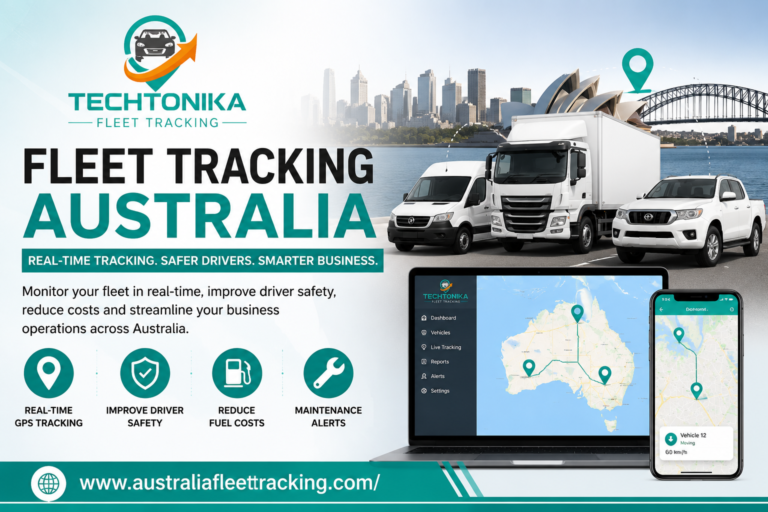

Commercial vehicles are valuable business assets. Vans, trucks, utes and delivery vehicles help businesses transport goods, serve customers and complete daily operations. However, vehicle theft can cause serious problems, including financial losses, delivery delays and unexpected business expenses.
An Anti-Theft Commercial Vehicle Tracker helps businesses monitor vehicle locations and improve visibility across their fleets. Using GPS positioning and mobile network connectivity, compatible tracking devices can send location information to a central platform or smartphone application.
For Australian businesses managing multiple vehicles, GPS tracking can provide useful information about vehicle movements, unexpected activity and last reported locations.
In this guide, we explain how commercial vehicle anti-theft trackers work, their important features and how businesses can choose a suitable tracking solution.
What Is an Anti-Theft Commercial Vehicle Tracker?
An anti-theft commercial vehicle tracker is an electronic tracking device designed to help businesses monitor the location and movement of their vehicles.
These devices commonly use GPS technology to calculate geographical positions. Depending on the model, they may also use cellular connectivity to transmit location information to an online tracking platform.
Fleet managers can access available tracking information through a computer or smartphone.
Common features include:
- GPS-based vehicle location monitoring
- Vehicle movement detection
- Ignition status monitoring on compatible models
- Geofencing alerts
- Location history
- Remote tracking through a mobile application
- Unauthorised movement notifications on supported devices
- Fleet monitoring and reporting
A GPS tracker does not physically prevent vehicle theft. However, it can provide location information that may support a theft investigation.
Why Do Commercial Vehicles Need Anti-Theft GPS Tracking?
Businesses often depend on commercial vehicles for daily operations. Losing access to even one vehicle can affect schedules, customers and revenue.
Here are some reasons to consider GPS tracking.
1. Reduce the Impact of Vehicle Theft
A stolen commercial vehicle can create significant financial pressure.
A GPS tracker may help businesses access the vehicle’s last reported location and available movement records.
If a vehicle goes missing, this information may help the owner provide useful details to the police.
2. Monitor Vehicle Locations
Businesses with multiple vans, trucks or utes may find it difficult to monitor every vehicle manually.
GPS tracking allows authorised users to view available vehicle locations from a central platform.
This can help fleet managers understand where their vehicles are operating.
3. Detect Unexpected Vehicle Movement
Some commercial vehicle trackers support movement detection and notifications.
If a vehicle moves unexpectedly during a scheduled parking period, a compatible tracking system may send an alert.
This can help businesses identify unusual activity sooner.
4. Improve Fleet Visibility
Vehicle location data can help managers understand fleet movements and daily operations.
They can review available location records, identify vehicle activity and make better operational decisions.
5. Support Business Continuity
Vehicle theft can interrupt deliveries, customer appointments and service operations.
GPS tracking may help businesses access useful information when investigating a missing vehicle and planning their next steps.
How Does an Anti-Theft Commercial Vehicle Tracker Work?
A commercial GPS tracker combines positioning technology, communication networks and tracking software.
Step 1: GPS Positioning
The tracker receives signals from navigation satellites to calculate the vehicle’s geographical position.
The accuracy of the reported location depends on the device, satellite visibility and surrounding environment.
Step 2: Mobile Network Communication
A cellular-enabled tracker uses a compatible mobile network to transmit location information.
Depending on the device, it may use a SIM card or embedded connectivity service.
Step 3: Data Transmission
The device sends available tracking information to a connected platform.
The platform processes the information and displays it through a dashboard or mobile application.
Step 4: Movement Monitoring
Some trackers can detect vehicle movement, ignition activity or other supported events.
The system may generate notifications when configured conditions are triggered.
Step 5: Review Vehicle Information
Fleet managers can access available information, such as:
- Current or last reported location
- Previous location records
- Movement history
- Ignition status, if supported
- Geofence notifications
- Device connectivity status
The exact information depends on the tracker and tracking software.
Important Features of an Anti-Theft Commercial Vehicle Tracker
Not all GPS trackers offer the same functions. Businesses should compare the following features before selecting a device.
1. Real-Time GPS Tracking
Real-time or frequent location updates help fleet managers monitor vehicle movements.
Check the device’s reporting interval and confirm whether it supports the update frequency your business needs.
Frequent updates may also increase data usage and power consumption.
2. Geofencing Alerts
Geofencing allows users to create virtual geographical boundaries around selected locations.
For example, a business can configure a geofence around its warehouse or vehicle parking area.
Compatible systems may send notifications when a vehicle enters or leaves the defined area.
3. Movement Detection
Movement detection can identify unexpected vehicle activity.
Depending on the device, businesses may receive notifications when a parked vehicle starts moving.
This feature can be useful outside normal operating hours.
4. Ignition Monitoring
Some commercial GPS trackers can monitor ignition status when correctly connected to the vehicle.
This may help fleet managers understand when a vehicle is switched on or off.
Check device compatibility and installation requirements before selecting this feature.
5. Location History
Location history provides access to previously reported vehicle positions.
Businesses can use these records to review vehicle movements and investigate unusual activity.
6. Smartphone Access
A mobile application allows authorised users to check available tracking information without being at the office.
This can be particularly useful for business owners and fleet managers who travel regularly.
7. Tamper Detection
Some tracking devices or installations support alerts when the device is disconnected or its power supply is interrupted.
Check whether tamper alerts are included in the selected product.
8. Reliable Network Compatibility
Commercial vehicles may travel across cities, regional roads and remote areas.
For Australian operations, check the tracker’s supported mobile network technology and coverage requirements.
A device’s communication capabilities should match the areas where your vehicles operate.
Which Commercial Vehicles Can Use GPS Anti-Theft Trackers?
GPS tracking can be used across different types of commercial vehicles, provided the device is compatible.
Delivery Vans
Delivery businesses can monitor vehicle locations and review movement records during daily operations.
Heavy Commercial Trucks
Transport operators can use GPS tracking to monitor truck locations and improve visibility across their fleets.
Company Utes
Tradespeople and service businesses can monitor company utes used by employees across different job locations.
Refrigerated Vehicles
Businesses operating refrigerated transport vehicles can monitor vehicle locations. Temperature monitoring requires additional compatible equipment.
Construction Vehicles
Construction businesses can monitor suitable vehicles and mobile machinery using compatible tracking solutions.
Rental and Leasing Vehicles
Rental companies can use GPS tracking to monitor vehicle locations and review available movement information.
GPS Vehicle Tracker vs Traditional Anti-Theft Alarm
Both technologies support vehicle security, but they serve different purposes.
| Feature | Traditional Alarm | GPS Vehicle Tracker |
|---|---|---|
| Detects unauthorised entry | On compatible systems | Not normally |
| Sounds an audible warning | Yes | Not normally |
| Location monitoring | No | Yes |
| Remote location updates | No | On compatible models |
| Movement history | No | On supported platforms |
| Geofencing | No | On compatible systems |
| Smartphone monitoring | Depends on alarm | Available on supported trackers |
A GPS tracker and a vehicle alarm can complement each other. An alarm may provide an immediate audible warning, while a GPS tracker can provide location information.
How to Choose the Right Commercial Vehicle Tracker in Australia
Before purchasing an anti-theft GPS tracker, consider your business requirements.
- Identify your vehicle types: Check whether the tracker supports your vans, trucks, utes or other commercial vehicles.
- Check GPS functionality: Review positioning specifications and reporting frequency.
- Compare security features: Look for movement alerts, geofencing and tamper detection where required.
- Review connectivity: Confirm compatibility with Australian mobile networks.
- Understand installation: Check whether professional installation or vehicle wiring is required.
- Compare tracking software: Review dashboard features, mobile applications and reporting tools.
- Check ongoing costs: Consider SIM, data and platform subscription charges.
- Review technical support: Check warranty conditions and after-sales assistance.
Businesses operating in regional and remote areas should pay particular attention to mobile coverage.
How Australia Fleet Tracking Can Help
Choosing the right GPS tracking solution can help businesses improve visibility across their commercial vehicles.
Australia Fleet Tracking provides GPS tracking products and information for vehicle and fleet monitoring.
Businesses can explore the following resources:
- Vehicle Tracking – Learn about GPS-based vehicle monitoring.
- Truck GPS Tracking – Explore tracking solutions for commercial trucks.
- Automatic GPS Tracking – Understand automatic GPS tracking technology.
- GPS Fleet Tracking Australia – Learn more about fleet monitoring.
The right product depends on vehicle compatibility, installation requirements, connectivity and the features your business needs.
Frequently Asked Questions
1. What is an anti-theft commercial vehicle tracker?
It is a GPS tracking device designed to help businesses monitor commercial vehicle locations and access movement information through a connected tracking platform.
2. Can a GPS tracker help locate a stolen commercial vehicle?
Yes. A compatible GPS tracker may provide the vehicle’s last reported location and available movement records. This information may support an investigation, but recovery is not guaranteed.
3. Can I track my commercial vehicle from my smartphone?
Yes. Many GPS tracking systems provide smartphone applications that allow authorised users to access vehicle location information remotely.
4. Does a commercial vehicle GPS tracker need a SIM card?
Most cellular GPS trackers require a SIM card or embedded connectivity service to transmit location information to a remote platform.
5. Can a GPS tracker send movement alerts?
Some tracking devices support movement detection and notifications when unexpected vehicle activity occurs.
6. What is geofencing in commercial vehicle tracking?
Geofencing allows users to create virtual geographical boundaries. Compatible tracking systems can send notifications when a vehicle enters or leaves a selected area.
7. Can GPS tracking work in remote areas of Australia?
GPS positioning may still work when satellite signals are available. However, transmitting location information remotely depends on the tracker’s communication technology and available network coverage.
8. Can I install a GPS tracker in multiple commercial vehicles?
Yes. Businesses can install compatible tracking devices across multiple vehicles and manage them through a central tracking platform.
9. Does GPS tracking prevent commercial vehicle theft?
No. GPS tracking does not physically prevent theft. It provides location and movement information that may help businesses respond to suspicious activity and investigate missing vehicles.
10. How much does a commercial vehicle GPS tracker cost in Australia?
Pricing varies according to the tracking device, installation, connectivity and software subscription. Contact the supplier for current product and service costs.
Final Thoughts
Commercial vehicle theft can affect business finances, customer service and daily operations. An anti-theft commercial vehicle tracker can provide an additional layer of visibility by helping businesses monitor vehicle locations and review movement information.
Features such as GPS tracking, geofencing, movement notifications and location history can support better fleet monitoring.
For Australian businesses, the most suitable solution should match vehicle requirements, mobile network coverage and operational needs.
Combining GPS tracking with strong physical security, responsible key management and secure vehicle parking can help create a more complete commercial vehicle security strategy.