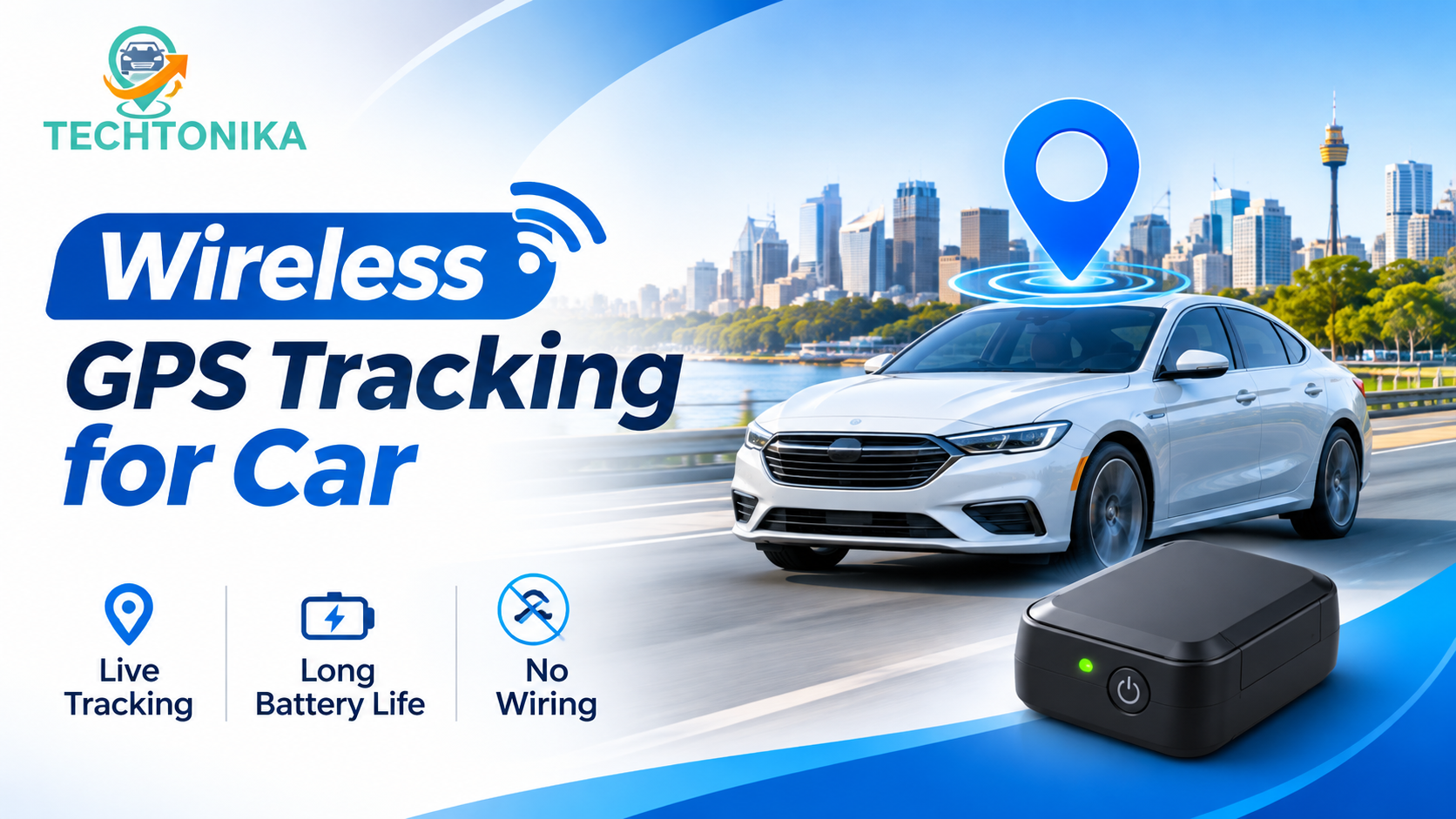
A wireless GPS tracker for car monitoring offers a convenient way to track your vehicle without connecting the device directly to its electrical system. Powered by an internal rechargeable or replaceable battery, a wireless car GPS tracker uses satellite signals to determine the vehicle’s location and, in cellular-enabled models, sends updates to a mobile app or online tracking platform.
Whether you own a personal car, manage rental vehicles or operate a small business fleet, a wireless GPS tracking device can help you monitor vehicle movements without permanent wiring. It is particularly useful when you need flexible installation, portable tracking or temporary vehicle monitoring.
However, choosing the right device requires more than checking its size or battery capacity. Battery life, GPS accuracy, 4G network compatibility, tracking frequency and mobile app features all affect everyday performance.
This guide covers how a wireless GPS tracker for a car works, its key benefits, different tracker types, installation options and the features to check before buying one in Australia.
What Is a Wireless GPS Tracker for a Car?
A wireless GPS tracker for a car is a battery-powered vehicle tracking device that determines its geographical location without relying directly on the vehicle’s electrical system.
Unlike a traditional hardwired GPS tracker, it does not normally require a permanent connection to the car battery or ignition wiring.
Most cellular-enabled wireless GPS trackers use three technologies:
- GPS positioning: Receives satellite signals to calculate the tracker’s geographical location.
- Mobile network connectivity: Sends location information through a supported cellular connection.
- GPS tracking software: Displays the vehicle’s reported location, movement history and available alerts through a mobile app or web dashboard.
Some wireless car trackers are designed for temporary monitoring, while others support regular vehicle tracking with configurable location reporting intervals.
One important point: wireless does not automatically mean subscription-free. A tracker using a SIM or eSIM may still require mobile data or a tracking service to transmit location updates.
How Does a Wireless GPS Tracker for Car Work?
A wireless GPS tracker follows a straightforward process. It receives satellite signals, calculates its position and sends the available information to a connected tracking platform.
Here is how a wireless car tracking device works:
1. Receives GPS Satellite Signals
The device receives signals from GPS satellites to calculate its geographical position. The quality of reception can depend on the installation location and surrounding environment.
2. Calculates the Vehicle’s Location
The tracker processes satellite information to determine its latitude and longitude. Depending on the device, it may also calculate speed and direction.
3. Sends Location Data Through a Mobile Network
A cellular-enabled GPS tracker uses a SIM or eSIM to transmit location information through a supported mobile network.
4. Displays Vehicle Location on a Tracking App
The tracking platform processes the information and displays the reported vehicle location on a map. Users can access available information through a smartphone or computer.
5. Sends Vehicle Movement Notifications
Depending on the device and software, the tracker may send alerts for unexpected movement, geofence activity and low battery levels.
For example, imagine leaving your car in a shopping centre car park. If the vehicle moves unexpectedly, a wireless tracker with movement detection may send an alert. You can then open the tracking application and check its latest reported location.
Remember that GPS and mobile connectivity perform different jobs. GPS determines where the tracker is, while the mobile network sends that information to your phone. Without a suitable communication connection, remote location updates may not reach your app.
Main Benefits of Using a Wireless GPS Tracker for Car
Wireless GPS tracking devices are useful when permanent vehicle installation is not practical. Their benefits depend on the device and tracking platform, but several features make them worth considering.
1. No Permanent Vehicle Wiring
A battery-powered GPS tracker does not usually require a direct connection to the vehicle battery or ignition wiring. This makes installation simpler and reduces the need for electrical modifications.
2. Flexible and Easy Installation
A wireless car GPS tracker can be placed in a suitable location according to the manufacturer’s instructions. Some magnetic GPS trackers can attach to appropriate metal surfaces.
Always make sure the device is secured properly and does not interfere with vehicle operation or safety equipment.
3. Vehicle Movement Monitoring
Supported GPS tracking platforms let you check reported vehicle movements and review location history. This can help you understand when and where a vehicle has travelled.
4. Movement and Geofence Alerts
Some wireless GPS trackers notify you when a vehicle starts moving or enters or leaves a predefined geographical area.
These alerts can be useful for monitoring parked vehicles and checking unexpected activity.
5. Portable Vehicle Tracking
Selected wireless GPS trackers can be moved between compatible vehicles. This is useful when you need temporary tracking rather than a permanently installed device.
6. Convenient Mobile App Access
Depending on the tracking service, you can view vehicle location, trip history and notifications from a smartphone or computer.
If you need to monitor a person rather than a vehicle, a dedicated personal tracking solution may be more appropriate.
Types of Wireless GPS Trackers for Cars
Wireless GPS trackers come in different designs. Understanding their differences will help you select a device that suits your vehicle and monitoring requirements.
1. Battery-Powered GPS Trackers
These devices use an internal rechargeable or replaceable battery. They are suitable for flexible installation and occasional vehicle monitoring.
Battery life varies according to capacity, tracking frequency, mobile signal strength and power-saving settings.
2. Magnetic GPS Trackers
Magnetic GPS trackers feature a magnetic casing that attaches to suitable metal surfaces. They are often used for temporary vehicle or asset monitoring.
Before buying, check the magnetic strength, weather resistance and battery capacity. Do not assume that every magnetic tracker is waterproof.
3. Rechargeable Wireless GPS Trackers
Rechargeable models allow you to charge the internal battery when required. Some offer sleep modes that reduce power consumption while the vehicle remains stationary.
They are a practical option if you can maintain a regular charging routine.
4. Compact Wireless GPS Trackers
Compact GPS tracking devices are designed for situations where installation space is limited.
However, a smaller size does not automatically mean better tracking performance. Check the antenna design, battery capacity, network compatibility and supported features before choosing one.
5. Bluetooth-Based Vehicle Trackers
Bluetooth trackers are different from independent cellular GPS trackers. They generally communicate with nearby compatible devices rather than sending continuous location updates through their own cellular connection.
They may help locate nearby items, but they should not be treated as a replacement for a dedicated vehicle GPS tracking system.
Important Features to Check Before Buying a Wireless GPS Tracker
A low purchase price should not be the only deciding factor when choosing a wireless GPS tracker for your car. The right features can make a significant difference to tracking reliability and everyday use.
Battery Life and Power Management
Check the battery capacity and the manufacturer’s estimated operating time. Find out whether the device supports sleep mode, movement detection or configurable reporting intervals.
A tracker that sends frequent location updates will generally use more battery power than one that reports less often.
Real-Time GPS Location Updates
Check how frequently the device reports its location. Some wireless GPS trackers provide frequent updates, while others use scheduled reporting.
If you need to monitor vehicle movements closely, make sure the reporting interval meets your requirements.
4G Network Compatibility in Australia
Network compatibility is particularly important for Australian buyers. Australia’s 3G networks have shut down, so older devices that depend on 3G may no longer provide reliable connectivity.
Before purchasing a wireless GPS tracker, check whether it supports the required 4G network bands and is compatible with the mobile network used by its SIM or service provider.
Mobile App and GPS Tracking Platform
A good GPS tracking platform should make vehicle monitoring straightforward.
Look for features such as:
- Current reported vehicle location
- GPS location and trip history
- Vehicle movement notifications
- Geofence alerts
- Device battery notifications
- Multiple vehicle management
For business owners, a centralised GPS tracking dashboard can make monitoring several vehicles easier.
Geofencing and Vehicle Alerts
Geofencing allows you to create a virtual boundary around a selected location, such as your home, office or business premises.
Depending on the device, you may receive a notification when the tracked vehicle enters or leaves that area.
Weather Resistance
If you plan to install the tracker in an exposed location, check its IP rating and the manufacturer’s installation guidance. Weather resistance varies between models.
Subscription and Running Costs
Some wireless GPS trackers require a SIM card, mobile data or a tracking subscription.
Check the complete running cost, including:
- GPS tracker purchase price
- SIM card or mobile data charges
- Tracking platform subscription
- Battery replacement or charging requirements
- Warranty and technical support
Understanding these costs before buying can help you avoid unexpected expenses.
Wireless GPS Tracker vs Wired GPS Tracker: What’s the Difference?
Wireless and wired GPS trackers both help monitor vehicle locations, but they suit different installation and monitoring requirements.
| Feature | Wireless GPS Tracker | Wired GPS Tracker |
|---|---|---|
| Power source | Internal battery | Vehicle electrical system |
| Installation | Usually simpler | Requires electrical connection |
| Permanent wiring | Not normally required | Required |
| Portability | Some models can be moved | Usually fixed |
| Battery maintenance | Charging or replacement may be needed | Usually no separate charging |
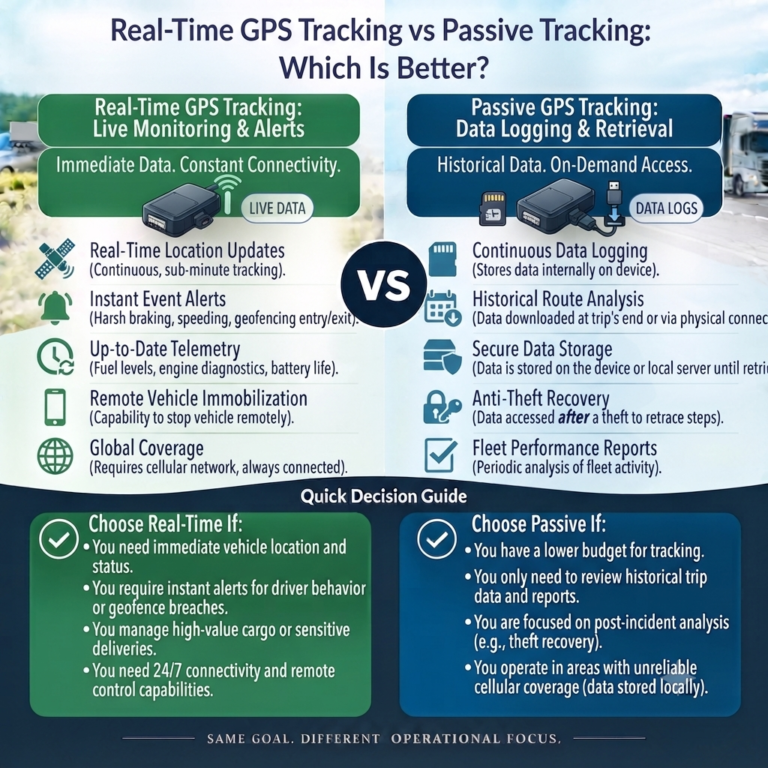
| Reporting frequency | Depends on battery and settings | Often supports frequent updates |
| Long-term monitoring | Depends on model and battery | Often suitable |
| Ignition monitoring | Not always supported | Available on compatible models |
If you need a permanent solution for a personal or business vehicle, explore a suitable car tracking device.
An OBD-based tracker is another option for compatible vehicles. It connects through the vehicle’s OBD port, so it is not the same as a battery-powered wireless tracker. You can learn more about OBD car tracking.
Is a Wireless GPS Tracker Better Than a Wired Tracker?
There is no single answer. The right choice depends on how often you use the vehicle, how you want to install the tracker and what information you need to monitor.
A wireless GPS tracker may suit you if:
- You do not want permanent vehicle wiring.
- You need temporary or flexible installation.
- You want to move the tracker between compatible vehicles.
- You can manage battery charging.
- You need basic vehicle location monitoring.
A wired GPS tracker may be more suitable if:
- You need a permanent installation.
- You want a continuous power supply from the vehicle.
- You manage several business vehicles.
- You need frequent location reporting.
- You want additional vehicle data, such as ignition status, where supported.
For businesses that need to monitor multiple vehicles, a dedicated GPS fleet tracking solution in Australia may offer more useful management features than individual battery-powered trackers.
How to Install a Wireless GPS Tracker in a Car
Most battery-powered wireless GPS trackers are straightforward to set up. The exact process depends on the manufacturer and model.
Follow these general installation steps:
- Charge the GPS tracker: Fully charge the device if it uses a rechargeable battery.
- Activate the device: Complete any required SIM, eSIM or account setup.
- Install the tracking app: Download the compatible mobile application.
- Register the tracker: Pair the device with your tracking account.
- Choose a suitable location: Place the tracker according to the manufacturer’s instructions.
- Test GPS reception: Check that the device reports its location correctly.
- Configure alerts: Set up movement notifications and geofencing if available.
After installation, test the device before relying on it for vehicle monitoring. Check its battery level, network connection and location updates.
If the device requires electrical connections, follow the manufacturer’s instructions and use a qualified installer where necessary.
Where Can You Use a Wireless GPS Tracker?
Wireless GPS trackers can support different vehicle and asset monitoring requirements.
Personal Cars
Car owners can check the reported location of their own vehicles and receive supported movement alerts. This is useful when monitoring a parked car or reviewing its previous journeys.
Rental Vehicles
Rental businesses can monitor vehicle movements where tracking is permitted and appropriate customer notices and permissions are in place.
Business Vehicles
Businesses can keep track of selected vehicles without permanent wiring, particularly when temporary installation is required.
For regular commercial fleet operations, a dedicated tracking platform may provide better centralised monitoring and reporting.
Trailers and Commercial Vehicles
Some battery-powered tracking devices are designed for trailers and other commercial assets. Choose a product built for the asset’s size, installation conditions and tracking requirements.
If you need to monitor trailers or commercial vehicles, explore trailer and truck tracking.
Equipment and Other Assets
Wireless tracking can also be useful for selected non-vehicle assets. For this purpose, an equipment and asset GPS tracking solution may be a better fit.
Frequently Asked Questions About Wireless GPS Trackers for Cars
1. Does a wireless GPS tracker for a car need a SIM card?
Cellular-enabled wireless GPS trackers generally need a SIM or eSIM to send location information over a mobile network. Bluetooth-based devices use a different communication method and may not provide independent remote tracking.
2. How long does a wireless car GPS tracker battery last?
Battery life depends on the device’s battery capacity, reporting frequency, network coverage, temperature and power-saving settings. Check the manufacturer’s estimates for the specific model.
3. Can a wireless GPS tracker work without internet?
The GPS receiver can calculate its location using satellite signals without an internet connection. However, a cellular tracker needs a suitable communication connection to send that location to your mobile app.
4. Can I install a wireless GPS tracker myself?
Many battery-powered models are designed for simple installation. You generally need to charge or activate the device, configure its application and place it in a suitable location. Always follow the manufacturer’s instructions.
5. Can I use one wireless tracker in multiple cars?
Some portable models can be moved between compatible vehicles. You may need to update the vehicle details in your tracking account when moving the device.
6. Does a wireless GPS tracker provide live location?
Some models support frequent location updates, while others report at scheduled intervals. Actual update frequency also depends on network coverage and device settings.
7. Are wireless GPS trackers suitable for business fleets?
They can be useful for selected temporary monitoring requirements. For regular fleet operations, a dedicated fleet tracking system may provide better power management, reporting and centralised vehicle monitoring.
8. Are GPS trackers legal in Australia?
Tracking your own vehicle for a legitimate purpose is different from tracking another person’s movements without their knowledge or permission. Workplace monitoring, surveillance and privacy requirements can vary across Australian states and territories. Check the applicable laws and provide appropriate notice where required.
Choose the Right Wireless GPS Tracking Solution for Your Vehicle
A wireless GPS tracker for car monitoring can be a useful option when you want flexible installation, battery-powered operation and access to vehicle location updates.
Before choosing one, look beyond the device size and purchase price. Battery life, 4G network compatibility, reporting frequency, tracking software and ongoing costs all affect how useful the tracker will be.
For permanent vehicle monitoring or regular business fleet operations, compare wireless devices with wired tracking options before making a decision.
Explore the vehicle tracking solutions available at Australia Fleet Tracking and choose a system that matches your vehicle, monitoring requirements and budget.