What Is GPS Asset Tracking?
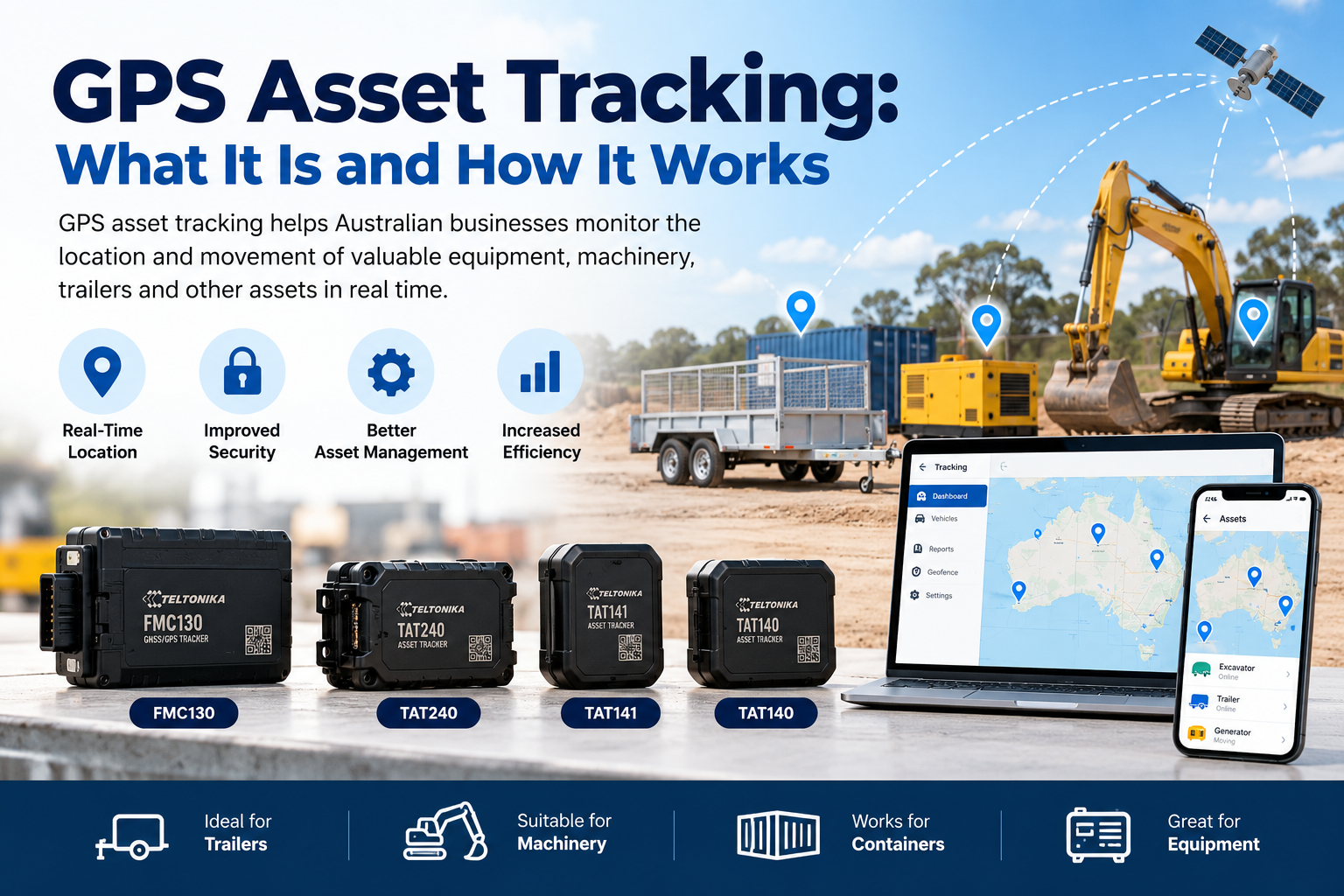
GPS asset tracking is a way to monitor the location and movement of valuable equipment, machinery, trailers and other business assets. It uses a GPS asset tracking device to collect location data and send it to tracking software. Businesses can view asset locations, check movement history and receive alerts when supported devices detect activity.
Australia Fleet Tracking helps businesses explore GPS tracking solutions for managing valuable assets. These solutions can be useful for construction companies, equipment hire businesses, transport operators and other businesses that need better visibility of their equipment.
GPS asset tracking can help businesses:
- Improve asset management and daily planning.
- Locate equipment across different sites.
- Monitor asset movement and activity.
- Receive alerts when assets move unexpectedly.
- Reduce time spent searching for equipment.
How a GPS Asset Tracking System Works?
A GPS asset tracking system uses three main parts: a tracking device, a communication network and tracking software. Together, these parts help businesses check where their assets are and review available tracking information.
1. The GPS Asset Tracking Device Collects Location Data
The tracking device uses GPS signals to estimate the asset’s location. Depending on the model, it may also detect movement, vibration, temperature or equipment usage.
Businesses can install suitable devices on trailers, generators, machinery, containers and other valuable assets.
2. The Device Sends Data to the Tracking Platform
The device sends collected information through a supported communication network, such as a mobile network. Some devices use Bluetooth gateways or satellite communication for specific applications.
The connection type matters because not all networks provide coverage in every location. Businesses operating in remote parts of Australia should check network availability before choosing a device.
3. The Software Displays Asset Information
The tracking platform displays the information received from the device. Users can check reported locations, view movement history and manage alerts through a computer or compatible mobile device.
Depending on the system, users may also set up geofencing. This feature creates a virtual boundary around a location and can send an alert when an asset enters or leaves the defined area.
4. Businesses Use the Information to Manage Assets
Tracking information helps businesses make better decisions about equipment allocation, movement and maintenance. For example, a construction company can check whether a generator is at the correct job site before arranging a transfer.
Tracking results depend on device features, network coverage, settings and how often the device sends updates.
Types of Asset Tracking Devices
Different assets need different tracking methods. A tracker designed for a powered excavator may not suit a shipping container that sits unused for several months.
| Device type | Suitable assets | Power source | Key features and considerations |
|---|---|---|---|
| Battery-powered GPS tracker | Trailers, containers and unpowered machinery | Internal battery | Flexible installation; battery life depends on reporting frequency and conditions |
| Wired GPS tracker | Powered machinery, vehicles and generators | Asset power supply | Can support frequent reporting and compatible operating data |
| Hybrid tracker | Heavy equipment and mixed-use assets | External power with battery backup, where supported | Helps maintain tracking during power interruptions |
| Bluetooth asset tag | Tools, ladders and small equipment | Usually a small battery | Useful for proximity and inventory checks; typically needs a compatible gateway or nearby device |
| Satellite-capable tracker | Remote assets outside normal cellular coverage | Model-dependent | Can support remote communication where the required satellite service is available |
These are general device categories, not a guarantee of specific features. Check the manufacturer’s documentation for each model before making a purchase.
Key Features to Compare Before Buying
1. GPS and positioning accuracy
GPS uses satellite signals to estimate location. Some devices also use other satellite navigation systems, Wi-Fi positioning or cellular positioning to improve location availability in suitable conditions.
Consider the environment in which the asset operates. Outdoor machinery may benefit from GPS, while small tools inside warehouses may be better suited to Bluetooth-based inventory tracking.
2. Connectivity and Australian coverage
Connectivity determines how the tracker sends its data to the platform.
Common options include:
1. Teltonika FMC130
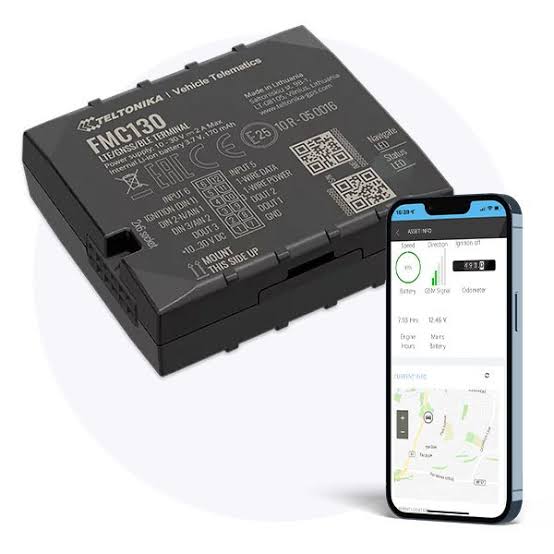
A 4G LTE Cat 1 GPS tracker for powered assets, vehicles, trailers and machinery. It supports configurable inputs, Bluetooth connectivity and a backup battery for tracking and monitoring applications. Teltonika Telematics+1
NEW TAMPER-PROOF TAT240 FOR MAXIMUM SAFETY OF YOUR ASSETS
2. Teltonika TAT240
A dedicated asset tracker for trailers, containers and equipment. Its features include 4G connectivity, movement detection and tamper alerts.
NEW TAT141 ASSET TRACKER FOR NORTH AMERICA
3. Teltonika TAT141
A battery-powered asset tracking device designed for applications requiring periodic location updates. Check LTE-M availability with your Australian connectivity provider before choosing this model.
TAT140 – 4G LTE Cat 1 Asset Tracker For Worldwide Coverage
4. Teltonika TAT140
A dedicated asset tracking option for monitoring equipment and other valuable assets. Review its battery, connectivity and reporting specifications against your requirements.
Check network compatibility, local coverage, roaming support and any planned network changes. A tracker that works overseas may not support every Australian network or frequency band.
3. Battery life and reporting frequency
Battery life is one of the most important factors for non-powered assets. A device that sends frequent updates generally consumes more power than one that reports occasionally.
Manufacturers may advertise multi-year battery life for selected models under specified operating conditions. Treat these figures as model-specific estimates, not universal guarantees.
Ask whether the quoted battery life assumes hourly reporting, occasional movement or a particular operating temperature. Also check whether the tracker supports a higher-frequency mode during recovery.
4. Geofencing and movement alerts
Geofencing creates a virtual boundary around a location, such as a construction site or depot. A compatible system can notify users when an asset enters or leaves that boundary.
Movement alerts can help identify unexpected activity outside working hours. However, an alert does not prevent theft or guarantee recovery. Staff need a clear process for reviewing notifications and responding promptly.
5. Sensors and equipment monitoring
Some trackers support additional sensors or equipment inputs. Depending on the hardware, these can monitor:
- Engine hours and equipment usage.
- Temperature and humidity.
- Vibration, impact or tilt.
- External power loss.
- Door or other compatible sensor states.
For example, engine-hour information may help a hire business plan servicing based on equipment use. A temperature sensor may help monitor conditions in a suitable cold-chain application.
Confirm sensor compatibility, installation requirements and calibration needs before relying on the data.
6. Software, reporting and integration
The tracking platform is as important as the hardware. Look for a clear map, asset lists, movement history, alert management and exportable reports.
If your business uses rental management, inventory or fleet software, check whether the tracking platform offers a documented API or another supported integration method. Confirm what data can be shared, whether extra fees apply and who will maintain the integration.
Benefits of Asset Tracking for Australian Businesses
An asset tracking system can improve day-to-day operations when staff use reliable data and follow consistent procedures.
- Better theft response: Review the last reported location and movement history when equipment goes missing.
- Improved equipment utilisation: Identify assets that remain idle at one site while another team needs them.
- Less manual searching: Give authorised staff a central view of tracked assets rather than relying entirely on calls and spreadsheets.
- More effective rental management: Check asset movements between depots, customers and job sites.
- Maintenance planning: Use supported engine-hour or usage data to inform servicing schedules.
- Improved record keeping: Compare tracking information with asset registers and allocation records.
- Better operational planning: Make informed decisions about equipment allocation, site transfers and fleet requirements.
Results depend on the quality of the hardware, coverage, software configuration and staff processes. Tracking alone does not guarantee cost savings or eliminate equipment loss.
Asset Tracking Applications Across Australian Industries
Construction and earthmoving
Excavators, generators, compressors and attachments can move between multiple sites. A rugged tracker with suitable mounting, movement alerts and compatible engine-hour monitoring may help contractors improve visibility and maintenance planning.
Equipment hire and rental businesses
Hire companies can use trackers to review asset locations and movements. This can support depot transfers, customer handovers and investigations into overdue equipment. Tracking should complement rental agreements, booking records and return procedures.
Transport, trailers and logistics
Battery-powered trackers may suit unpowered trailers and containers. Transport businesses should consider reporting intervals, theft-recovery features and coverage along their operating routes.
Warehouses and supply chains
Bluetooth tags can help staff identify nearby tools, containers or other small assets when compatible gateways are available. For assets moving across large outdoor areas, GPS tracking may be more suitable.
Agriculture and remote operations
Farm machinery, pumps and other valuable equipment may operate far from urban centres. Buyers should assess mobile coverage across the actual operating area. Satellite-capable equipment may be appropriate for some remote applications, provided its communication service supports the required use.
Cold-chain transport
Businesses that need temperature visibility should select a tracker or sensor system with verified temperature-monitoring support. Check the measurement range, accuracy, calibration requirements, reporting intervals and alert behaviour. A standard GPS tracker does not automatically measure temperature.
How to Choose the Right Asset Tracking Device
Before buying, assess the following requirements with your operations team.
Asset type and value
Choose hardware that suits the asset’s size, value, movement and risk of loss.
Power and installation
Decide whether the asset supports permanent wiring or needs an independent battery.
Reporting requirements
Determine whether hourly updates are sufficient or you need more frequent location reports.
Operating conditions
Check temperature limits, dust and water resistance, vibration tolerance and mounting options.
Coverage and software
Confirm Australian network compatibility, platform access, alert functions and integration options.
Total ownership cost
Compare hardware, installation, subscriptions, connectivity, maintenance and warranty terms.
A useful rule is to match the device to the operational problem first, then compare models. A basic tracker may suit a low-risk container, while expensive machinery may justify additional sensors, backup power and more frequent reporting.
Technical, Installation and Connectivity Considerations
Installation affects tracking performance as much as the device itself. Metal enclosures, poor antenna placement and exposed mounting locations can weaken signals or damage hardware.
For battery-powered equipment, ask how often the device reports, how it handles long periods without movement and whether it stores locations during network outages. For wired equipment, confirm the voltage range, installation method and backup-power behaviour.
Also review the manufacturer’s environmental ratings. An IP rating describes protection against dust and water ingress under defined test conditions; it does not automatically establish resistance to chemicals, impact, extreme heat or every outdoor condition.
Finally, check that the tracking platform can export the information your team needs. Documented APIs and compatible integrations can help connect asset data with rental, maintenance or inventory systems. The specific integration options depend on the hardware and software provider.
Frequently Asked Questions
What is the difference between an asset tracker and a vehicle tracker?
An asset tracker can monitor many types of physical equipment, including containers, trailers, machinery and tools. A vehicle tracker focuses on vehicles and may provide additional information such as ignition status, trip history or vehicle diagnostic data.
How long does an asset tracking device battery last?
Battery life varies by model, reporting frequency, network conditions, temperature and battery capacity. Some specialised trackers advertise multi-year operation, but buyers should check the manufacturer’s stated conditions and expected maintenance requirements.
Can an asset tracking device work in remote Australia?
Yes, if its positioning and communication technologies suit the operating area. A cellular tracker needs compatible mobile coverage to transmit live updates. Satellite-connected solutions may suit remote operations where mobile networks are unavailable.
Can I receive an alert when equipment leaves a site?
Compatible devices and software can support geofencing and movement alerts. You can define a virtual boundary around a depot or job site and receive notifications when the system detects a qualifying event.
Does every GPS tracker monitor temperature or engine hours?
No. These functions require compatible hardware, inputs or sensors and software support. Confirm the exact model’s specifications before purchasing.
What does an asset tracking device cost?
The total cost depends on hardware, installation, connectivity, software subscriptions, sensors and support. Compare the full ongoing cost rather than selecting a tracker on its purchase price alone.