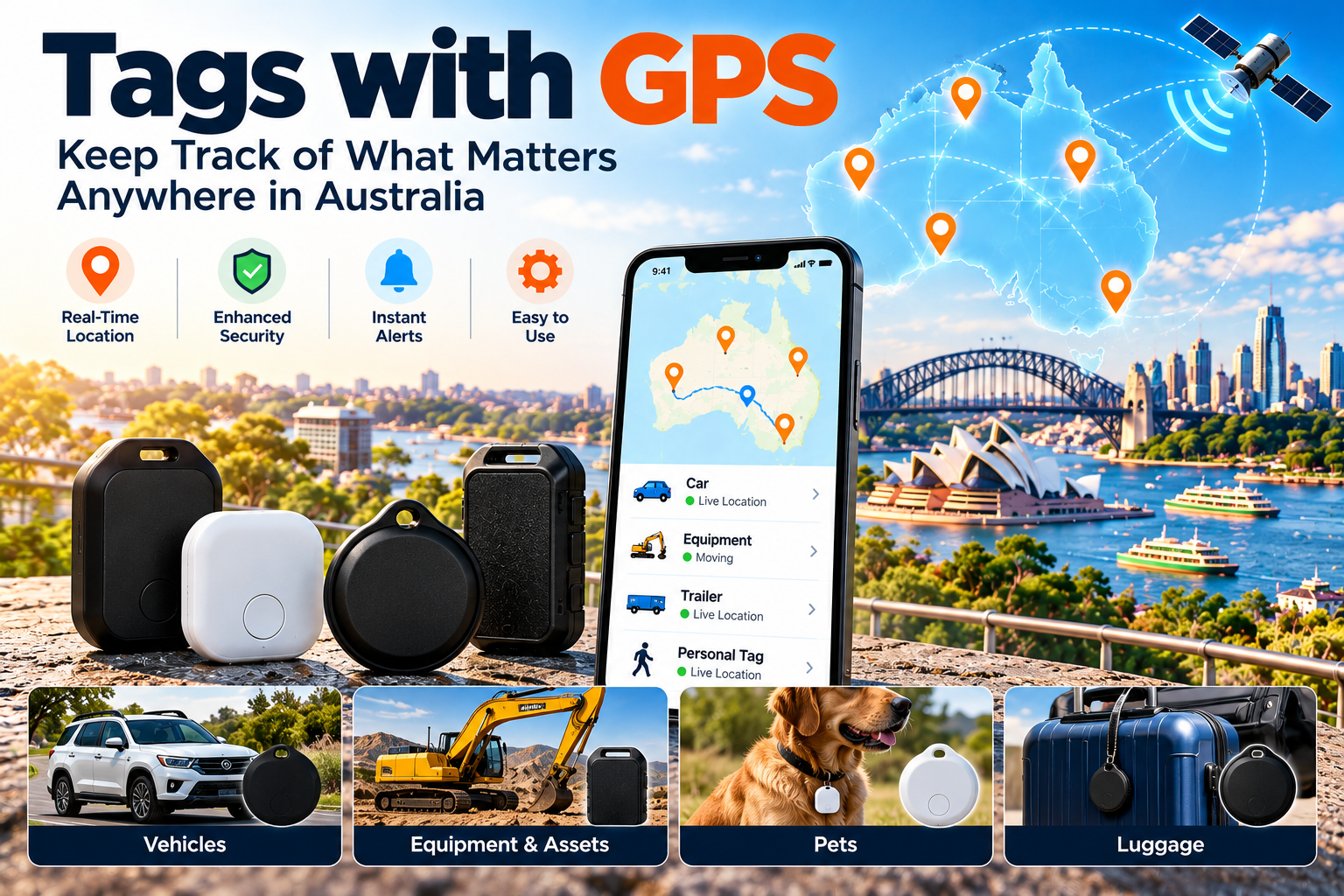
Tags with GPS can help people and businesses keep track of important items. These tags may be used for vehicles, equipment, bags, and other valuable assets. The right tracking solution can help you check an item’s location and make it easier to manage your belongings.
In Australia, GPS tracking is useful for businesses that manage cars, trucks, tools, machinery, and other equipment. However, not every small tracking tag uses GPS directly. Some tags use Bluetooth and rely on nearby phones or other devices to help locate an item. Understanding this difference can help you choose the right product.
What Are GPS Tracking Tags?
GPS tracking tags are small devices designed to help locate an item. A GPS-enabled tag uses satellite signals to estimate its location. Depending on the model, it may send location information through a mobile network or another supported connection.
You may be able to view the location through a mobile app or online tracking platform. Features depend on the device and its service plan.
For example, a business may use a tracking device to monitor a trailer or valuable piece of equipment. A traveller may prefer a small Bluetooth tag to help find luggage nearby.
Before buying a tag, check how it works, how often it updates its location, and whether it needs a subscription.
How Do Tags with GPS Work?
A GPS tracking tag usually works through a few simple steps.
First, the device receives signals from GPS satellites to calculate its location. A compatible tracking device then sends location information through its supported communication network. The tracking platform displays the information so the user can check the reported location.
Some devices can also provide alerts, location history, or movement information. These features vary between products.
It is important to understand that GPS and mobile connectivity are different. GPS helps determine location, while a communication connection may be needed to send that location to your phone. Remote tracking can be limited when network coverage is poor.
Different Types of GPS Tracking Tags
The best tracking tag depends on what you want to track. Here are some common options to consider.
1. Vehicle Tracking Tags
Vehicle tracking devices help owners and businesses monitor cars and other vehicles. They can support location checks, trip history, and fleet management.
Businesses with company cars or rental vehicles may benefit from a suitable car tracking device. The right solution depends on the vehicle, installation requirements, and features needed.
2. GPS Tags for Equipment and Assets
Businesses often need to keep track of tools, machinery, trailers, and other valuable equipment. An appropriate asset tracking device can help record locations and support better asset management.
For larger equipment and business assets, explore equipment and asset GPS tracking in Australia. You can also learn more about asset tracking solutions.
Before choosing a tag, check whether it is suitable for the asset’s size, working conditions, battery needs, and expected tracking range.
3. GPS Tracking for Trucks and Fleets
Transport companies may need more than a small tag. They often require tracking devices that can provide regular vehicle location updates and help managers oversee multiple vehicles.
A suitable fleet tracking system can help businesses view their vehicles from one platform. Learn more about GPS fleet tracking in Australia and truck GPS tracking.
These solutions can help managers review routes, check vehicle activity, and plan daily operations.
4. Bluetooth Tracking Tags
Bluetooth tags are often small and easy to carry. People commonly attach them to keys, bags, or luggage.
Unlike a standalone GPS tracker, a Bluetooth tag usually works over a short distance or relies on a compatible network of nearby devices to help locate an item. Its performance depends on the product and the system it uses.
If you want to track an item across long distances, check the technology carefully. A basic Bluetooth tag may not provide the same remote tracking features as a GPS tracker with mobile connectivity.
5. Personal Tracking Devices
Personal tracking devices can help locate a person or provide location information for safety and coordination purposes. The right device depends on the user’s needs, battery life, coverage, and available alerts.
Always choose a suitable product and respect the privacy and consent of the person being tracked. Check local laws and the device’s privacy settings before use.
Benefits of Using GPS Tracking Tags
GPS tracking tags can provide several benefits when you choose the right device.
Easier location checks: Tracking technology can help you find the reported location of a suitable tagged item.
Better asset management: Businesses can maintain clearer records of valuable equipment and selected assets.
Movement alerts: Some devices can notify users when an item moves or enters or leaves a selected area.
Improved fleet visibility: Vehicle tracking systems can help managers see where their vehicles are and review trip information.
More organised operations: Tracking information can support planning and help teams spend less time checking the location of vehicles or equipment manually.
Remember that no tracking device can guarantee that an item will always be found. Battery life, network coverage, installation, and the tracking technology all affect performance.
How to Choose the Right GPS Tag
Before purchasing a GPS tag, consider these important factors.
Check the Tracking Technology
Find out whether the device uses GPS, Bluetooth, cellular connectivity, or a combination of technologies. This will help you understand its range and how it reports locations.
Review Battery Life
Small tags may use replaceable batteries or rechargeable batteries. Larger vehicle tracking devices may connect to the vehicle’s power supply. Choose an option that suits how often you need to track the item.
Check Coverage in Australia
Australia has large regional and remote areas, and mobile coverage can vary. If you need remote tracking, confirm that the device supports the required network and the areas where you operate.
Compare Tracking Features
Some devices provide basic location information, while others support alerts, trip history, reports, or fleet management features. Choose the features that match your actual needs.
Consider Size and Installation
A small tag may suit keys or luggage, while vehicles and heavy equipment may need a more robust tracking device. Check the mounting method, weather protection, and installation requirements.
Understand the Total Cost
Look beyond the purchase price. Some devices need a monthly subscription or mobile data service. Ask about ongoing costs, software access, warranties, and technical support before buying.
Are GPS Tracking Tags Suitable for Businesses?
Yes, the right tracking solution can help businesses manage selected vehicles and assets more effectively.
For example, a trades business may want to monitor expensive tools or machinery. A transport company may need vehicle tracking across its fleet. A rental operator may want better visibility of its vehicles between bookings.
The important step is to match the tracking technology to the job. A small Bluetooth tag may suit nearby item searches, while a GPS tracking device with suitable connectivity may be better for remote vehicle and asset monitoring.
Find the Right Tracking Solution in Australia
When comparing tags with GPS, focus on what you need to track, how far away the item may be, and how often you need location updates. Also check battery life, connectivity, coverage, and any ongoing service costs.
Australia Fleet Tracking offers tracking solutions for vehicles, fleets, trucks, and equipment. If you need help finding a suitable option for your business, contact Australia Fleet Tracking to discuss your requirements.
Choosing the right device can help you keep track of important vehicles and assets while making daily management easier.