The decision this article should help readers make
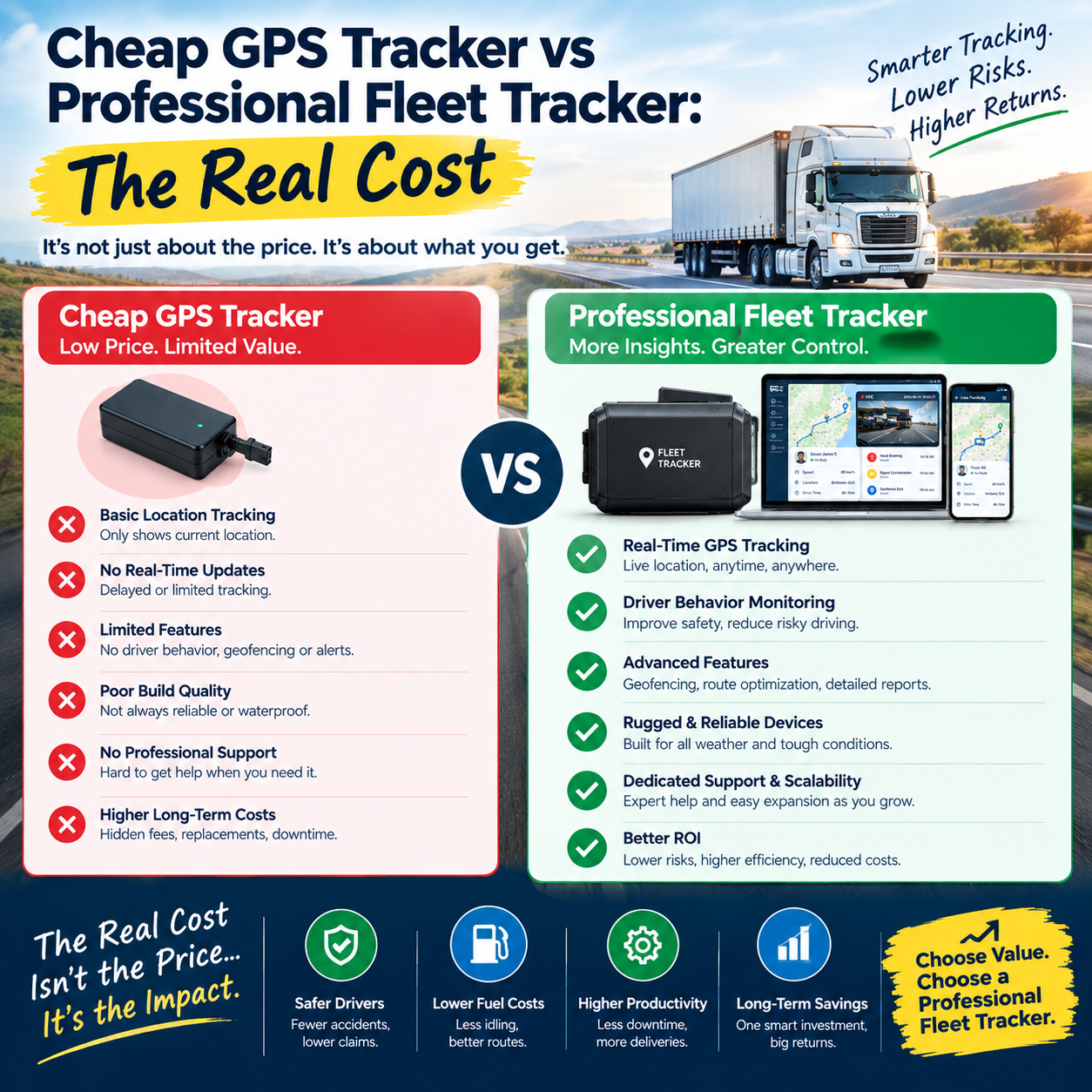
A cheap tracker may be adequate for a low-risk experiment, but sticker price says little about Australian network compatibility, platform quality, installation, alert reliability, data retention and support. A professional solution should justify its premium with evidence—not branding alone.
A useful implementation starts with the decision, then works backward to data, configuration and ownership. The platform should make limitations visible: last-update time, device health, asset assignment and the difference between an automated signal and a verified business event.
| Decision area | Evidence to use | Implementation rule |
| Hardware | Radio bands, GNSS, power management, enclosure and interfaces | Check the exact order code and documentation. |
| Service | SIM, platform, alerts, history, users and updates | Confirm inclusions and exit arrangements. |
| Installation | Safe wiring, concealment, testing and records | Poor installation can defeat good hardware. |
| Support | Configuration, diagnosis, replacement and warranty | Ask for response ownership and realistic hours. |
Build a reliable operating process
Treat the tracking platform as one part of the operating system. Job, maintenance, finance, safety and workforce records may be needed to interpret what the device reports. The following sequence creates a repeatable control rather than another set of notifications.
- Define the business decision and failure consequence.
- Compare like-for-like hardware and service scope.
- Verify Australian connectivity and current model support.
- Price installation, staff setup and troubleshooting time.
- Pilot alert delivery, history and device-health visibility.
- Calculate a two- or three-year total cost per usable asset-month.
Assign a named owner to each recurring report or alert and document what closes the item. Acknowledging a notification is not the same as resolving its underlying cause. Where data affects a worker, customer or legal decision, preserve source records and provide an appropriate correction or review process.
Common mistakes and how to avoid them
Most poor outcomes come from weak definitions and governance rather than inaccurate satellite positioning. Review these risks during the pilot and again after the first reporting cycle.
- Comparing hardware-only price with a managed service
- Assuming marketplace ratings prove long-term support
- Buying a 3G or unsuitable overseas variant
- Ignoring platform access after cancellation
- Equating a premium price with professional implementation
Do not turn operational data into unsupported certainty. A vehicle near a site may not have completed the job; a diagnostic code may not identify the required repair; and an automated score may not fairly describe a driver. Use corroborating records and professional judgement.
Australian privacy, safety and compliance boundaries
Location history may identify workers, customers, homes and sensitive sites. Define the purpose, give required notices, limit collection, use named accounts and multi-factor authentication, restrict exports and apply a documented retention period. Workplace-surveillance and privacy requirements differ by jurisdiction and circumstance, so obtain advice for the actual operation.
For heavy vehicles, telematics can support monitoring and evidence within a Safety Management System, but it does not establish compliance by itself. Scheduling, alerts or performance targets must never pressure a driver to speed, skip maintenance, exceed work limits or operate while unfit to drive.
Record configuration changes, device-to-asset assignments and known outages. Those controls make operational reports more trustworthy and help a business explain what data could and could not show at a particular time.
What ‘professional’ should mean
Professional should be observable: documented hardware specifications, configuration control, named platform support, installation records, warranty handling, device-health alerts and a replacement process. If the seller cannot explain these, the label adds little value.
Conversely, not every low-cost device is unusable. A basic unit may suit a non-critical pilot if the business accepts the limits and tests them. The decision should reflect consequences of missed alerts, unavailable history or failed hardware.
Use a comparable three-year worksheet
Add device, freight, SIM, subscription, installation, transfer, accessories, battery service, replacement and internal support time. Then divide by months the asset was actually reporting. This exposes ‘cheap’ units that spend weeks offline and premium systems whose unused features never change a decision.
Practical Australian example
A 12-vehicle trade fleet compares a low-cost online device with a configured hardwired service. The first quote excludes SIMs, installation and platform support.
After adding staff setup, replacement assumptions and downtime, the gap narrows. The fleet pilots both and measures reporting continuity, alert delivery and time to resolve faults.
The final choice is based on usable service and support burden, not the first invoice.
A 90-day implementation plan
- Days 1–15: define the business question, asset groups, baseline, users and legal requirements.
- Days 16–30: configure a pilot using representative vehicles, routes and difficult coverage or power conditions.
- Days 31–45: test timestamps, assignments, alerts, calculations, exports and failure states against source records.
- Days 46–60: issue notices, train managers and workers, establish owners and document correction and escalation paths.
- Days 61–75: deploy in controlled waves and reconcile every device, SIM and asset before accepting the installation.
- Days 76–90: compare results with the baseline, remove noisy controls and approve the next improvement cycle.
| Success test: A reader should be able to identify the next decision, the evidence required, the owner and the limitation of the GPS data. |
Questions to ask a tracking provider
- Which Australian mobile networks and radio technologies are supported, and how are coverage gaps shown?
- What update intervals, history retention, device-health alerts and exports are included?
- Can access be restricted by role, depot, vehicle group and report type?
- Which device, user, asset-assignment and configuration changes appear in the audit log?
- What are the hardware warranty, installation record, replacement process, support hours and exit costs?
- Which capabilities are rules, analytics or genuine AI, and can the supplier show the underlying evidence?
Ask for a demonstration using a realistic ordinary day and a failure case. The supplier should show a stale last-known point, an offline device, a corrected vehicle assignment and the workflow for closing an exception—not only a polished live map.
Frequently asked questions
Are cheap GPS trackers inaccurate?
Not necessarily, but accuracy is only one issue. Connectivity, power, configuration, platform and support also matter.
What should a professional quote include?
Hardware, accessories, installation, SIM, platform, support, warranty, billing term and exit costs.
Do I need local support?
It matters when configuration, installation or network issues affect operations.
Can I supply my own SIM?
Sometimes. Confirm APN, data, roaming, SMS, management and support responsibilities.
How do I compare reliability?
Pilot representative assets and review reporting gaps, device health and support resolution—not testimonials alone.
About Techtonika Autolink
Techtonika Autolink helps Australian businesses choose, install and configure GPS tracking for vehicles and mobile assets. For practical advice on hardware, professional installation and platform setup, visit https://techtonika-autolink.com/ or call 0452 653 745.