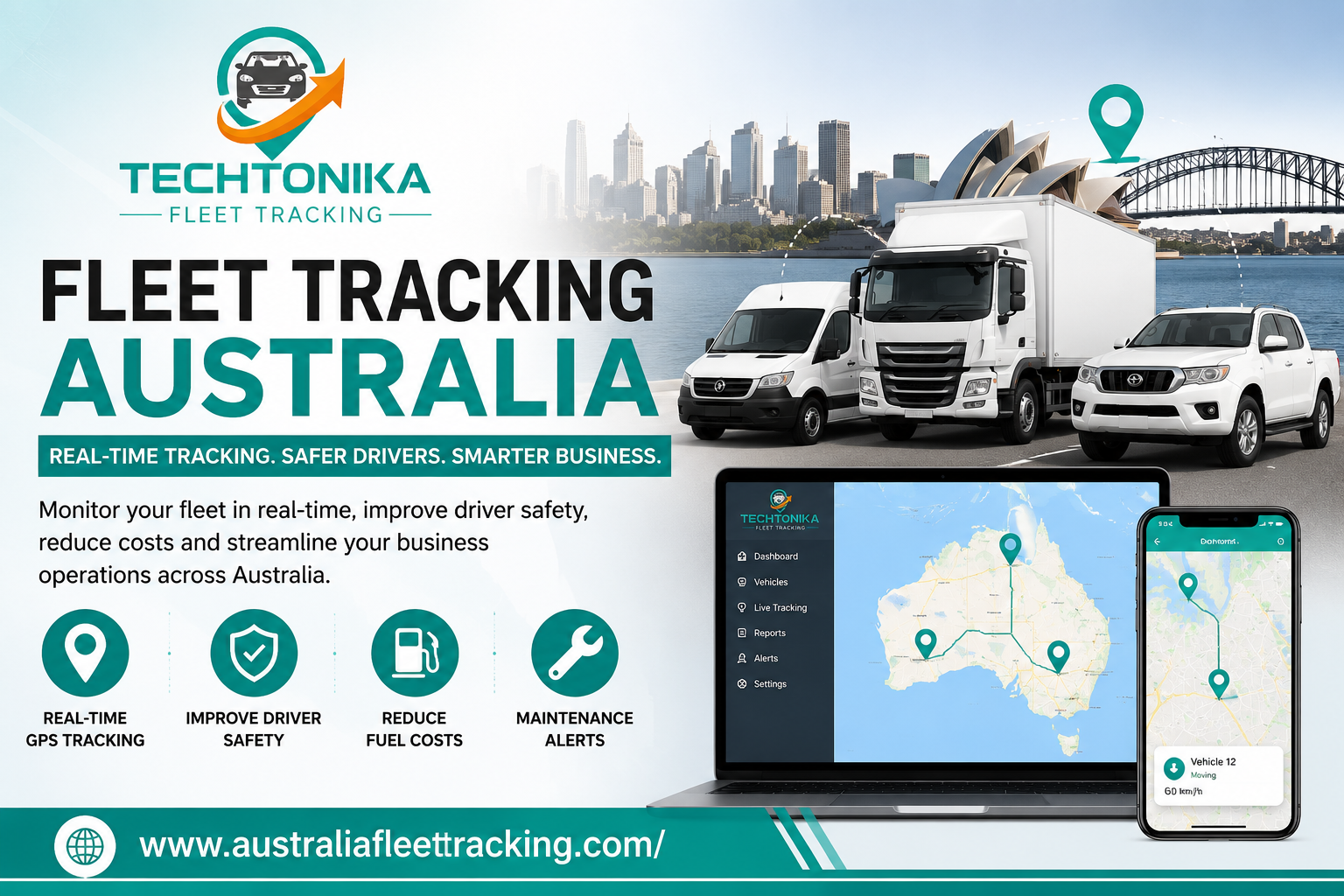
In Australia, many businesses rely on a multitude of fleets ranging from delivery vans and trucks to service vehicles and company cars. Keeping all drivers safe has become a priority, and for a good reason. Accidents and delays from careless driving lead to employees being put at risk and an increase in costs. Because of these factors, many companies have started investing in real-time fleet tracking australia.
Advanced technology in fleet tracking systems does much more than showing a vehicles’ location. It enables businesses to monitor driver behavior, facilitate business communication, and manage risks. It helps in establishing safe roads for all. Whether you manage a fleet that comprises of a handful of vehicles, or a fleet of several hundreds, real-time fleet tracking technology can be very helpful.
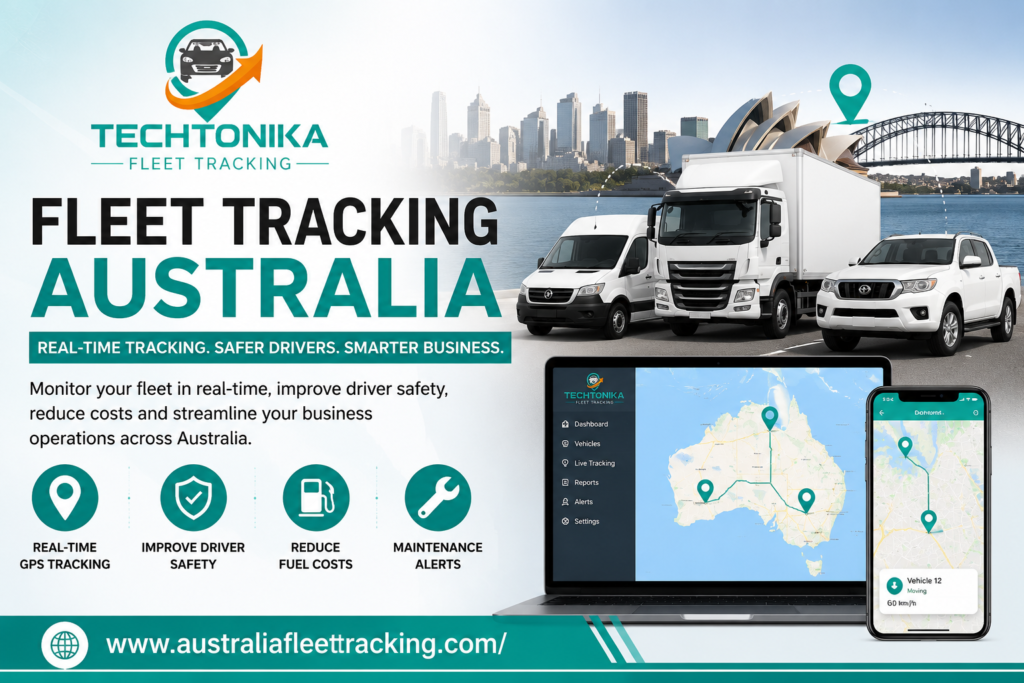
What do you mean by Real-Time Fleet Tracking Australia?
Real-time fleet tracking refers to the tracking that uses the Global Positioning System (GPS) to track the location of vehicles, and how they are moving. Fleet managers can trace the location of each vehicle at any time.
Most of these systems also provide other valuable information such as:
- Speed.
- Directions traveled.
- Performance.
- Fuel consumption.
- Time spent idling.
- Behavior.
- Maintenance notifications.
Since the information is constantly and in real-time, businesses can take action on any issues that could compromise the security of drivers.
Why Is Driver Safety Important in Australia?
Australia is a big country with many individuals who frequently travel great distances. This is particularly the case for companies operating in the construction, delivery, transportation, as well as service industries, as they are in remote or cities.
Unsufficient driving can lead to:
- Accidents.
- Damage to vehicles.
- Increased costs of insurance.
- Delivery delays.
- Increased costs of fuel.
- Employee injuries.
There are many reasons for protecting drivers, including the fact that it is the right thing to do, it saves the business money, and it preserves the positive reputation of the business.
Promoting Safe Driving
The ability to view a fleet in real time helps one of those fleets to develop safe driving habits. Fleet tracking systems can help monitor key driving behaviors.
- Speeding.
- Braking.
- Acceleration.
- Cornering.
- Idling.
Delivery drivers tend to drive more carefully when they know that their driving habits are being scored. Fleet managers have the ability to pull driving habit reports and coach them for improvement.
While the main intention of these systems is to promote safe driving, the positive byproduct is the safer roads.
Rapid Response to Emergencies
While no business owner wants an accident to occur, there is the potential for accidents at any given time. The ability for a fleet to be tracked in real time allows the business to respond to that accident in the right way.
Fleet managers have the ability to:
- Locate the fleet in real time.
- Call the driver.
- Dispatch assists (roadside or emergency).
- Inform affected customers about delays.
This all is very helpful at reducing the potential risks of an accident and getting the driver the help that they need.
Addressing Driver Fatigue
Drivers are a major issue for companies in Australia who have fleets that are long-haul. Fleet tracking systems enable companies to track and manage breaks and hours of service for drivers. This information has the ability to help fleet managers create healthier schedules and relieve drive fatigue.
The main intention of fleet tracking systems is to promote safe driving but the systems are really designed to help manage drivers.
Improved Planning Means Better Safety
Planning routes poorly increases the chances of an unsafe drive, and adds stress for the driver. Detours due to construction, along with heavy traffic, make driving a chore.
Real time tracking of fleets means businesses can better plan routes, thanks to:
- Real-Time Traffic.
- Optimal Routing.
- Alternative Paths.
- ETA.
Traffic is less, and the driver can concentrate on driving.
Keeping Vehicles from being Misused
Business put thousands into their fleet, and misuse speeds up the wear. It can also be a risk to safety.
With GPS fleet tracking, a business can:
- Trace fleet movements.
- Establish a work zone.
- Get notifications for abnormal behavior.
- Track usage after work.
Having the knowledge of movements for all vehicles, gives better control and protection to the drivers and the assets of the business.
Enhancing Driver Training
Tracking fleets gives a business an edge in seeing how drivers behave.
Things a manager can see include:
- Speeding.
- Braking.
- Idling.
- Inefficient Routes.
This data helps develop a focused, safe training program, and drivers get feedback that is useful in enhancing safety on the roads. This helps drive a culture of safety in the business.
Keeping Vehicles in Good Condition
Safety of the driver and fleet can be impacted by the condition of the vehicles. Worn drivers, and brakes can impact safety.
A lot of these vehicle tracking systems can send reminders for maintenance on:
- Mileage.
- Hours.
- Service intervals.
- Vehicle health.
Scheduled maintenance is excellent for business. It ensures that equipment stays functional and that employees stay safe.
Decreased Costs
The safety of drivers influences the overall expenses of a business. Insurance providers view companies with fleet tracking as less risky.
Companies can:
- Avoid incidents.
- Lower fuel usage.
- Decrease maintenance costs.
- Lower the downtime of vehicles.
- Make operations more effective.
These costs can be allocated to the education of drivers, modernizing vehicles, and the expansion of the business.
Australia’s Fleet Tracking Technology Advancement
The technology of fleet tracking is in a state of constant advancement. The following are a few of the latest updates:
- AI (artificial intelligence).
- Dash cams.
- Predictive maintenance.
- Driver scorecards.
- Automated safety alerts.
The continuing advancement of the Australian economy will allow fleet tracking technology to be used for the safety of personnel and the optimization of business processes.
Fleet tracking technology is being advanced by companies now to ensure that they are ready for the future.
To Conclude
Real-time tracking of fleets is not a technology aimed at solely monitoring vehicles anymore. Innovations in tracking technology have made driver and safety management an emphasis in Australia.
The technology of fleet tracking allows companies to track employees’ behavior, manage routes, reduce fatigue and react to emergencies. This technology helps create an environment that is safer for employees.
Techtonika Autolink
Follow Us
Facebook: https://www.facebook.com/profile.php?id=61591321884124
Instagram: https://www.instagram.com/techtonikaautolink/
LinkedIn: https://au.linkedin.com/company/techtonika-autolink
Unit 507, 15 Chatham Rd West, Ryde NSW 2114